Older Than the Mountains: What a Jharkhand Rock Reveals About Earth's First Life
In 2026, geologists recovered 3.497-billion-year-old biosignatures from the Singhbhum Craton in eastern India. Embedded in ancient chert, the find suggests microbial life took hold astonishingly soon after Earth formed.
Long before dinosaurs, trees, or atmospheric oxygen, primitive microbial life was already thriving on Earth. In 2026, geologists analyzing 3.497-billion-year-old chert from Jharkhand's Singhbhum Craton discovered organic carbon biosignatures and direct zircon dates — providing a rare, pristine glimpse into Earth's earliest biosphere.
Aakash Bhagat
Founder & Editor
•Updated September 24, 2026•7 min read
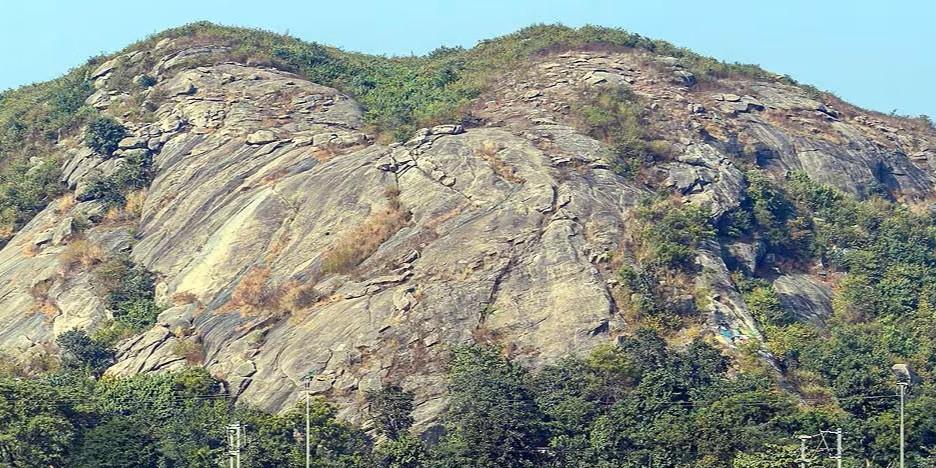
Ancient silica-rich chert and crystalline bedrock formations, resembling the Paleoarchean strata of the Singhbhum Craton in Jharkhand.Archaeological Archives
Atop the sacred Sivagiri hill in Palani, Tamil Nadu, stands an ancient idol crafted not from stone or bronze, but from Navapashanam—an alchemical matrix of nine deadly poisons solidified by Sage Bogar. Discover the hidden chemistry, the healing powers of the overnight sandal paste and abhishekam prasadam, the subterranean tunnel connecting Bogar's samadhi, and the controversial 2004 replacement that triggered an international antiquities investigation.
High in eastern Turkey’s Tendürek Mountains, a 515-foot boat-shaped formation has puzzled researchers for 65 years. In September 2026, university archaeologists began direct core drilling for the first time since 1988. Discover what was actually recovered, how Collins and Fasold exposed early claims, and the falsifiable test awaiting 2027 lab results.
Coorg's hillside resorts book out months in advance now. Gokarna's main beach can feel more like a queue than a shoreline, and Hampi comes with tour buses in equal measure. But Karnataka's Malnad hill country and coastal belt hold a genuinely different kind of trip: rainforest instead of resort, empty tide lines instead of beach shacks, and moss-draped forts you'll have mostly to yourself. Discover 7 secret places in Karnataka that redefine South Indian travel.
Long before dinosaurs, before trees, before there was enough oxygen in the atmosphere for a fire to burn, something was already alive on this planet — and in 2026, a team of geologists found direct, datable evidence of it embedded in a rock from eastern India. The rock is 3.497 billion years old. To put that in perspective: Earth itself formed roughly 4.5 to 4.6 billion years ago. This means life, in some genuinely basic microbial form, had already taken hold on our planet a little over a billion years after it finished forming — a startlingly short interval, geologically speaking, for something as complex as life to get started.
Bhitardari, East Singhbhum, Jharkhand (20km S of Jamshedpur)
Geochronological Age
3,497 ± 11 Million Years (3.497 Billion Years / Paleoarchean)
Lithological Matrix
Microcrystalline Chert with Intercalated Kerogen Bands
Biological Evidence
Carbon-12 enriched microbial mat biosignatures
Radiometric Method
Uranium-Lead (U-Pb) decay in co-located zircon crystals
Principal Investigator
Dr. Trisrota Chaudhuri, Geological Survey of India (GSI)
Scientific Journal
Proceedings of the National Academy of Sciences (PNAS, 2026)
What a Craton Actually Is
The rock in question comes from the Singhbhum Craton, and it's worth pausing on that word, since it's doing real work in this story. A craton is a stable, ancient chunk of continental crust — a piece of the Earth's surface that has largely escaped the crushing, folding, and melting that most of the planet's crust has undergone through billions of years of plate tectonics. Cratons are, in effect, geological survivors: fragments of very early Earth that have sat relatively undisturbed while everything around them was recycled, deformed, or destroyed.
The Singhbhum Craton spans parts of Jharkhand and Odisha in eastern India, and it's recognised as one of the oldest surviving pieces of continental crust anywhere on the planet. The specific discovery came from rock near Bhitardari village, in Jharkhand's East Singhbhum district, roughly 20 kilometres south of Jamshedpur — an unassuming rural location that turns out to be sitting on one of the oldest readable chapters of Earth's history.
Hunting for Traces Life Left Behind
The rock itself is chert — a hard, extremely fine-grained, silica-rich stone that geologists prize precisely because of how well it preserves fine detail over immense timescales, functioning almost like a natural sealed container for whatever got trapped in it as it formed. Within the Bhitardari chert, geologist Trisrota Chaudhuri of the Geological Survey of India and an international team of collaborators identified thin, alternating dark and light bands — the dark material identified as kerogen, a carbon-rich organic residue.
These bands aren't fossils in the sense most people picture — no shells, no visible cell walls, nothing you could point a magnifying glass at and immediately call "a creature." They're biosignatures: chemical and structural traces consistent with what are known as microbial mats — layered, carpet-like communities of microorganisms, roughly analogous in ecological role (though certainly not in complexity) to the mats formed by modern cyanobacteria in shallow water today. To distinguish genuine biological carbon from carbon produced by purely geological, non-living processes — a real and persistent challenge in claims this old, as we'll come back to — the team analysed the carbon's isotopic signature and found a relative enrichment of carbon-12 over carbon-13, a chemical pattern strongly associated with biological carbon fixation rather than abiotic (non-living) mineral processes.
The dating itself relied on zircon crystals embedded directly within the rock. Zircon is prized in geochronology because its crystal structure incorporates uranium at formation and essentially locks it in, allowing scientists to measure the radioactive decay of uranium into lead and calculate, with real precision, how long ago the crystal formed. Analysing eight zircon crystals recovered from the chert, the team found four gave a consistent age of approximately 3,497 million years — 3.497 billion years.
Why This Particular Discovery Stands Out
It's worth being precise about what makes the Bhitardari find scientifically significant, beyond simply being very old. Two other sites have long anchored the search for Earth's earliest life: the Pilbara Craton in Western Australia (home to the famous, and famously contested, Apex Chert) and the Barberton Greenstone Belt in South Africa, both containing carbon-rich rock of comparable antiquity, in the 3.4-to-3.5-billion-year range. What sets the Indian find apart, according to the research team, is that the age of the fossil-bearing rock and the age of the biosignature itself were established from the very same sample — the zircon crystals used for dating were found embedded directly within the chert containing the carbon evidence. At Pilbara and Barberton, by contrast, ages have more often been inferred indirectly, from separately dated rock layers nearby, rather than from datable material physically co-located with the biological evidence itself. That distinction matters a great deal in a field where the central, recurring problem is confidently separating true ancient biology from look-alike geology.
Global Archean Biosignature Sites Compared
Singhbhum Craton (Bhitardari, India)
Radiometric Age:3.497 Billion Years (direct U-Pb dating)
Dating Provenance:Zircons embedded directly inside the biosignature-bearing chert
Biosignature Type:Layered kerogen bands with verified C-12 isotopic enrichment
Scientific Status:Published in PNAS (2026); replication and multi-lab testing underway
Pilbara Craton (Apex Chert, Australia)
Radiometric Age:~3.465 Billion Years (inferred from surrounding strata)
Dating Provenance:Dated indirectly via adjacent volcanic ash/tuff beds
Scientific Status:Contested since 2002 (Brasier reinterpretation as hydrothermal graphite)
And that problem is real, not hypothetical. The Apex Chert findings from Pilbara, first published by paleobiologist J. William Schopf in the 1980s as apparent fossilised microorganisms, became the subject of a genuine, sustained scientific dispute after a 2002 study by Martin Brasier and colleagues argued the structures were more likely secondary artefacts formed from non-biological graphite rather than actual fossils. That controversy has never been fully resolved to universal satisfaction, and it stands as a caution the Bhitardari researchers themselves have been careful to acknowledge. Chaudhuri has directly noted that ancient microbial mats are rarely well preserved, given the deformation and heating most rocks this old undergo, and that "careful identification is required as abiotic processes may generate 'biomarker-like' signatures" — an appropriately cautious framing from the very scientist who made the find. Other Indian geologists, including Nitish Priyadarshi, have echoed that caution publicly, noting that more detailed laboratory work is still needed before the finding can be considered fully settled. The study itself, published in the Proceedings of the National Academy of Sciences, presents the case as a strong and multiply-corroborated one — direct dating, carbon isotopes, structural banding, and molecular analysis all pointing the same direction — while treating independent follow-up verification as the appropriate next step, exactly as good scientific practice requires for a claim this consequential.
Macro view of deep-time crystalline silica and mineral veining, representative of ancient chert beds preserving organic kerogen.Photo: Geological Field Archive
What It Would Mean, If Confirmed
If the biological interpretation holds up under further scrutiny, the implications extend well beyond a single rock in Jharkhand. It would place functioning microbial ecosystems on Earth as early as roughly 1.1 billion years after the planet's formation — much earlier than the conditions we associate with a habitable world (liquid water, a stable crust, some protection from the intense bombardment of the early solar system) might intuitively suggest were possible. These early microbes, whatever their exact nature, would have been engaged in something close to primitive photosynthesis or carbon fixation — converting carbon dioxide into organic matter — a process that, repeated and scaled up over the following billions of years by countless generations of increasingly complex organisms, eventually built the oxygen-rich atmosphere every animal on Earth today depends on. In that sense, a find like this isn't just about proving something lived a very long time ago; it's a data point in reconstructing the actual chemical pathway that turned an inhospitable young planet into one capable of supporting everything that came after.
Deep-Time Perspective: From Earth's Genesis to Human Antiquity
c. 4.54 Billion Years Ago
Planetary Accretion & Primordial Magma Ocean
Earth condenses from the solar nebula, surviving the Late Heavy Bombardment and initial crustal consolidation.
c. 3.497 Billion Years Ago
Singhbhum Microbial Biosignatures
Primitive microbial mats perform biological carbon fixation in shallow waters in what is now East Singhbhum, Jharkhand.
c. 2.40 Billion Years Ago
The Great Oxidation Event (GOE)
Photosynthetic microorganisms transform planetary geochemistry, saturating the ocean and atmosphere with free oxygen.
c. 500,000 – 160,000 Years Ago
Narmada Human (Hathnora Cranium)
Archaic hominins inhabit central India’s Narmada basin — thousands of times closer to our present day than to the Singhbhum chert.
c. 74,000 Years Ago
Mount Toba & Jwalapuram Toolmakers
Middle Palaeolithic hunter-gatherers survive the ash blanket of the Youngest Toba Tuff in Andhra Pradesh.
2026 CE
PNAS Singhbhum Discovery Published
Geologists confirm 3.497-billion-year-old co-located zircon and kerogen biosignatures from Bhitardari, Jharkhand.
Not to Be Confused With Human History
It's worth being explicit about a distinction that's easy to blur in casual conversation: this is a story about microbial life — bacteria-like single-celled organisms — not about humans, or even about any recognisable ancestor of humans. The evolutionary distance between a 3.5-billion-year-old microbial mat and the first hominins is almost incomprehensibly vast.
For genuine context on India's human history specifically, the relevant comparison isn't billions of years old — it's hundreds of thousands. The most significant early hominin fossil found on the subcontinent is the so-called Narmada Human (originally "Narmada Man"), a partial skull discovered at Hathnora in Madhya Pradesh's Narmada Valley in 1982. It's worth noting, in the interest of getting this right, that its classification has genuinely shifted over time and remains somewhat unsettled among specialists: the discoverer, Arun Sonakia, originally assigned it to a new taxon, Homo erectus narmadensis, and it's still popularly described that way. But subsequent detailed morphometric studies — notably a widely cited 1991 reassessment — concluded the specimen is more appropriately identified as an early or archaic form of Homo sapiens, sharing some features with Asian Homo erectus but not decisively matching it. Its age has similarly been revised: Sonakia's original estimate placed it at roughly 500,000 to 600,000 years old, while later reassessment of the surrounding sediment places it more conservatively in the Middle to Late Pleistocene, somewhere between about 160,000 and 50,000 years ago. Even taking the older estimate, though, the comparison holds: several hundred thousand years is a genuinely vast span of time by any ordinary human measure — and it is, nonetheless, a rounding error against 3.5 billion.
The Ground Beneath Us
What a discovery like this ultimately offers isn't a neat, closed answer — it's a genuinely rare, direct physical link to a period of Earth's history that almost nothing survives to describe. The soil and rock under a small village south of Jamshedpur, it turns out, has been quietly holding a fragment of the planet's origin story since before there was a moon-cratering bombardment behind us, before there was an ocean as we'd recognise one today, and very nearly since there was an Earth at all.
“Careful identification is required as abiotic processes may generate biomarker-like signatures... yet direct zircon geochronology places this rock at the very dawn of our planet's living record.”
Dr. Trisrota Chaudhuri — Geological Survey of India (GSI)
Scholarly Frequently Asked Questions
How old is the rock discovered in Jharkhand, and what does it contain?▼
The chert rock from Bhitardari village in Jharkhand’s Singhbhum Craton is dated to 3.497 billion years old. It contains layered kerogen bands and carbon-12 isotopic enrichment consistent with ancient microbial mats.
How did geologists determine the precise age of the Bhitardari rock?▼
Scientists used Uranium-Lead (U-Pb) radiometric decay analysis on microscopic zircon crystals embedded directly within the fossil-bearing chert, yielding a precise age of 3,497 million years.
What makes the Singhbhum discovery unique compared to Australia’s Pilbara Craton?▼
At Bhitardari, the zircon crystals were found directly co-located inside the exact same chert sample containing the organic biosignature, providing direct rather than bracketed or indirect dating.
Does this discovery involve human or animal fossils?▼
No. This discovery involves microscopic single-celled organisms (microbial mats) that lived 3.5 billion years ago. By comparison, early hominins like the Narmada Human lived only 160,000 to 500,000 years ago.
Why are geologists cautious about calling these structures definitive fossils?▼
Abiotic geological processes, such as hydrothermal graphite deposition, can mimic biological signatures (as seen in the controversial Apex Chert of Australia). Scientists emphasize independent replication to confirm the findings.
Explore Related Inquiries into Deep Time, Geology & Antiquity