The Alchemical Fire: How Southern India’s Wootz Steel Shaped the Medieval World
Centuries before modern material science, ancient furnaces in Southern India engineered ultra-high-carbon crucible alloys that baffled European and Middle Eastern metallurgists for millennia.
The blades that terrified Crusader knights were forged in Damascus, but the crucible steel was smelted thousands of kilometres away in South India. Discover the 2,500-year-old metallurgical chemistry behind wootz ingots, cementite banding, and ancient global trade.
Aakash Bhagat
Founder & Editor
•Updated September 9, 2026•8 min read
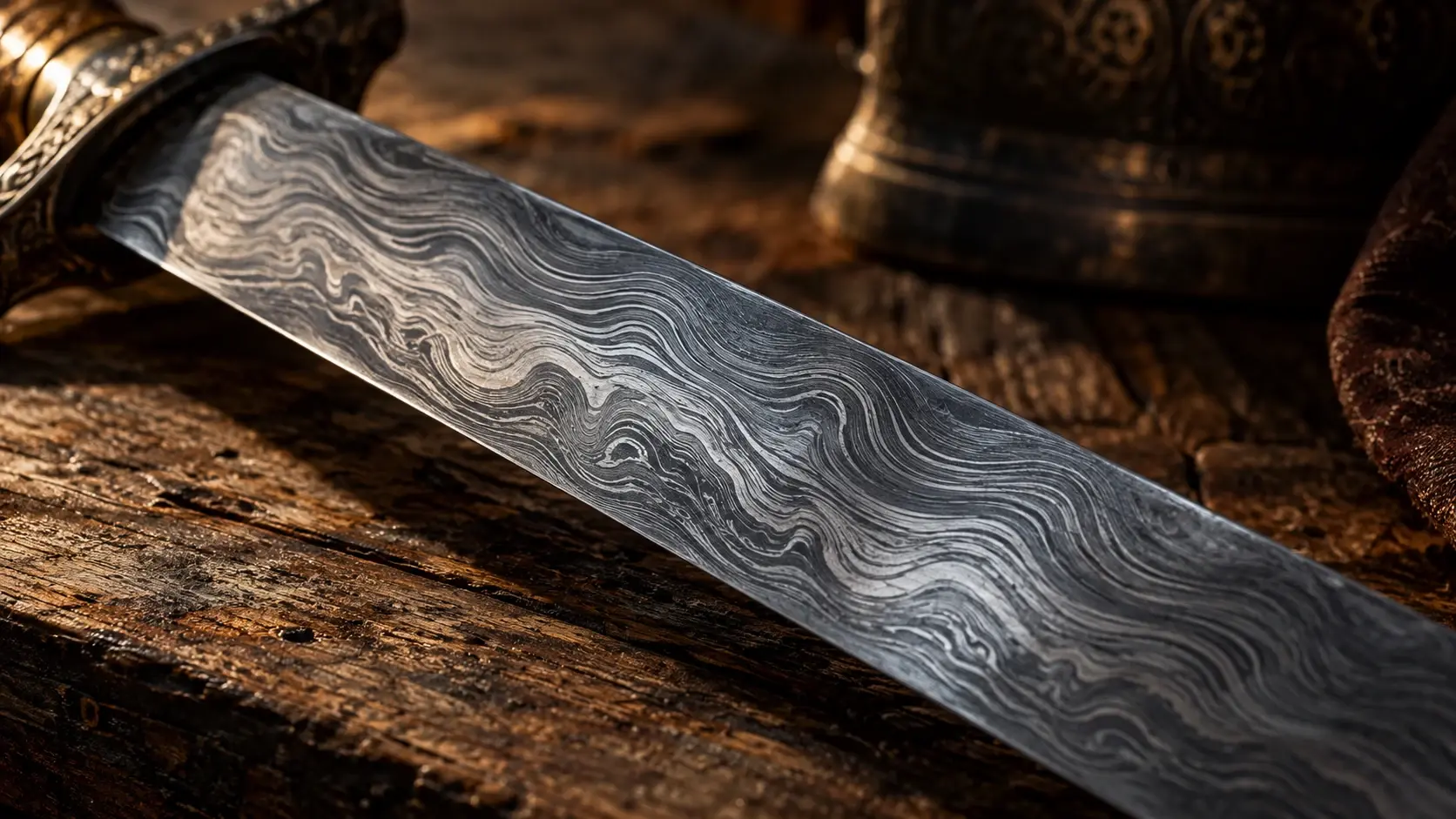
High-contrast etching reveals the characteristic watered silk (jauhar) cementite banding of an authentic crucible steel blade.Archaeological Archives
Atop the sacred Sivagiri hill in Palani, Tamil Nadu, stands an ancient idol crafted not from stone or bronze, but from Navapashanam—an alchemical matrix of nine deadly poisons solidified by Sage Bogar. Discover the hidden chemistry, the healing powers of the overnight sandal paste and abhishekam prasadam, the subterranean tunnel connecting Bogar's samadhi, and the controversial 2004 replacement that triggered an international antiquities investigation.
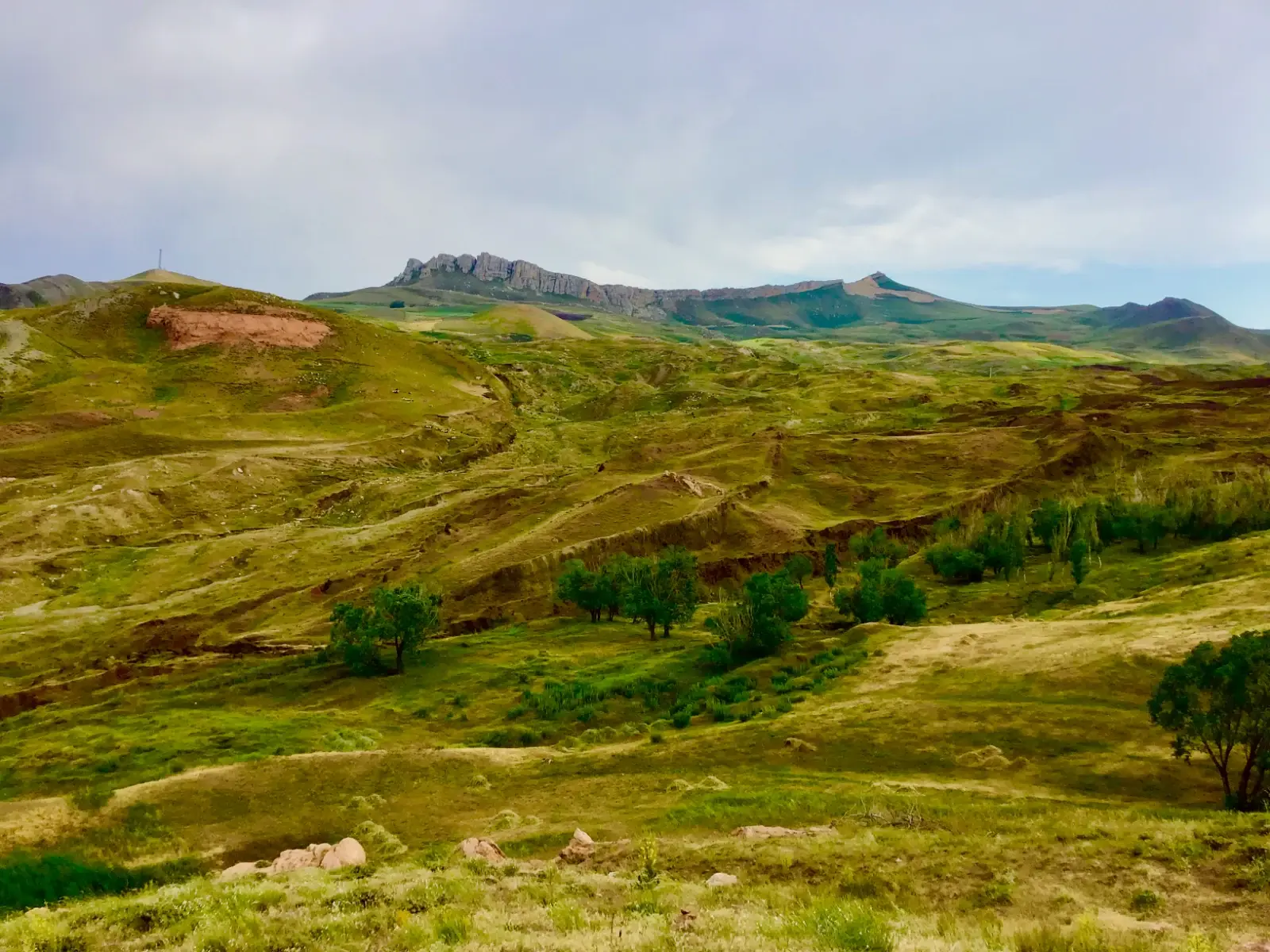
High in eastern Turkey’s Tendürek Mountains, a 515-foot boat-shaped formation has puzzled researchers for 65 years. In September 2026, university archaeologists began direct core drilling for the first time since 1988. Discover what was actually recovered, how Collins and Fasold exposed early claims, and the falsifiable test awaiting 2027 lab results.
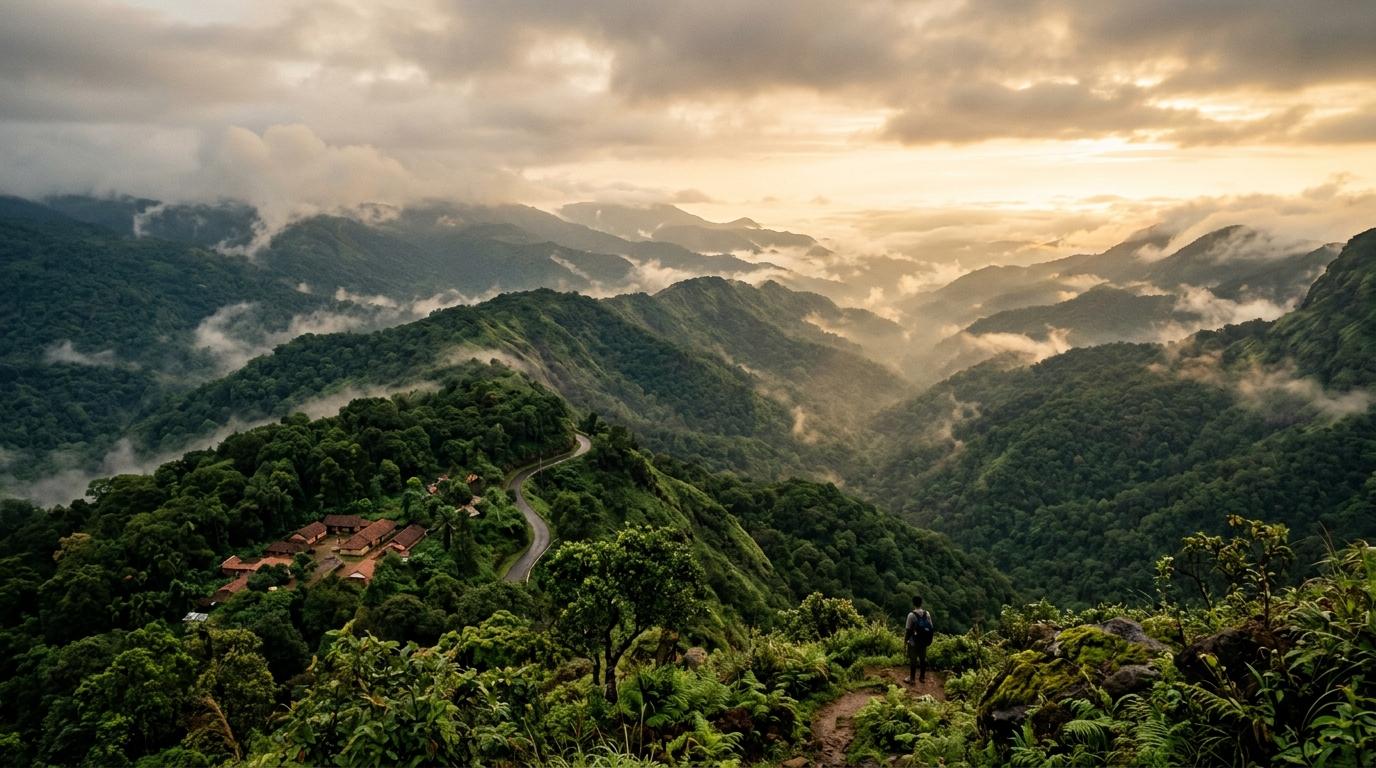
Coorg's hillside resorts book out months in advance now. Gokarna's main beach can feel more like a queue than a shoreline, and Hampi comes with tour buses in equal measure. But Karnataka's Malnad hill country and coastal belt hold a genuinely different kind of trip: rainforest instead of resort, empty tide lines instead of beach shacks, and moss-draped forts you'll have mostly to yourself. Discover 7 secret places in Karnataka that redefine South Indian travel.
There is a particular irony in how the word "Damascus" came to define a technology it never actually originated. The blades that terrified Crusader knights and inspired centuries of failed European imitation were forged in Syria, yes — but the steel itself, the raw ingot that made those blades possible, was smelted thousands of kilometres away, in charcoal-fired furnaces scattered across the hill country of Tamil Nadu, Andhra Pradesh, and Karnataka. Historians call it wootz steel, and its story is less about swordsmithing than about a chemistry problem that South Indian metalworkers solved roughly two and a half thousand years before anyone understood what carbon actually was.
Textual and archaeological evidence together place the origins of this crucible steel somewhere in the mid-first millennium BCE — some traditions trace it as far back as the 6th century BCE, while the firmest archaeological confirmation, from the industrial site at Kodumanal near modern Erode, dates production to around the 3rd century BCE. Either way, this predates the European discovery of controlled high-carbon steelmaking by well over two thousand years. What ironworkers in this region achieved, largely through empirical trial and generational refinement rather than theoretical chemistry, was a process so difficult to reverse-engineer that it stumped British and European metallurgists well into the 19th century, long after the original Indian industry itself had faded.
The Crucible Revolution: How Wootz Was Made
European bloomery iron of the same era was produced by a fundamentally different, cruder method: ore was reduced into a spongy mass of iron and slag, which smiths then hammered repeatedly to squeeze out impurities. It was laborious, and it produced iron of inconsistent, generally low carbon content. Indian metallurgists took an entirely different approach — one that essentially pre-invented the crucible steel process that Europe would not rediscover until Benjamin Huntsman's work in Sheffield in the 1740s.
Ancient Metallurgy: Indian Sealed Crucible vs. European Bloomery Iron
Microstructure:Heterogeneous granular ferrite prone to brittleness
The Ingredients: Botanical Charges and Trace Elements
The ingredients. Workers packed pieces of wrought or bloomery iron into small sealed clay crucibles, roughly the size of a large cup, along with a carbon source. Historical accounts and archaeometallurgical studies point to the wood and bark of Cassia auriculata (known locally as avaram), sometimes combined with the leaves of Calotropis gigantea, a milkweed shrub. These weren't arbitrary choices — later analysis suggests the plant matter also introduced trace elements, including phosphorus and possibly vanadium, that influenced the steel's final microstructure.
The Firing: Complete Liquefaction at 1,400°C
The firing. The sealed crucibles were stacked in furnaces fuelled by charcoal, sometimes assisted by bellows and, in Sri Lankan variants of the technology, by wind-powered furnace designs that harnessed monsoon winds directly. Temperatures climbed past 1,300°C, and in many furnace designs well above 1,400°C — hot enough to fully melt the iron rather than merely soften it, a feat European bloomery techniques of the same period couldn't achieve. In this molten state, the iron absorbed carbon released from the decomposing plant matter, typically ending up with a carbon content somewhere between 1% and 2% by weight — several times higher than ordinary wrought iron, and firmly in the range materials scientists today classify as ultra-high-carbon steel.
The Cooling: Microstructural Cementite Organization
The cooling. This is the step that made wootz genuinely unique. Rather than being quenched or worked immediately, the crucibles were left to cool at an extremely slow, controlled rate — over hours or even days. This unhurried cooling gave the carbon inside time to organise itself, precipitating out as a fine, dendritic network of cementite (iron carbide) distributed through a softer matrix of steel. It's this microstructure, not any surface treatment, that gives wootz its defining character.
Empirical Metrics of South Indian Crucible Wootz
Carbon Concentration
1.0% to 2.0% ultra-high-carbon matrix
Thermal Operating Range
1,300°C to > 1,400°C in high-draft kilns
Key Botanical Reagents
Cassia auriculata (avaram) & Calotropis gigantea
Cooling Kinetics
Gradual furnace cooling over hours/days forming cementite dendrites
The Anatomy of a Legend: Strength and the "Water" Pattern
When a smith later forged this ingot into a blade — a process that itself required real skill, since overheating during forging could destroy the very structure that made the steel special — two remarkable properties emerged.
The pattern. Etching a finished blade with a mild acid revealed a rippling, banded pattern that Persian and Arab writers described as resembling flowing water or watered silk — in Persian and Urdu sources this is often referred to as jauhar. This wasn't decoration applied afterward. It was the visible signature of the cementite bands laid down during that slow cooling back in the Indian crucible, brought to the surface by the etching acid reacting differently with the harder carbide bands than with the softer matrix around them.
The mechanical paradox. Ordinary logic suggests a blade should be either hard (and therefore brittle) or tough (and therefore soft at the edge) — you don't usually get both. Wootz's layered microstructure sidestepped this trade-off. The cementite bands gave the edge exceptional hardness and the ability to hold a fine edge far longer than contemporary European steel. The surrounding softer matrix absorbed shock and flexed under stress, preventing the catastrophic shattering that plagued more uniformly hard, brittle steels. It is this combination — not superstition, though plenty of superstition attached itself to these blades over the centuries — that let Damascus swords reportedly cut through mail and still flex without snapping.
“Ordinary logic suggests a blade should be either hard (and therefore brittle) or tough (and therefore soft at the edge). Wootz’s layered microstructure sidestepped this trade-off: cementite bands gave exceptional edge hardness, while the softer surrounding matrix absorbed shock under stress.”
Materials Science Analysis — Microstructural Mechanics of Damascus Steel
Some modern materials-science analysis, including work examining nanoscale structures within surviving Damascus blades, has suggested the presence of carbon nanotube-like formations contributing to this toughness — a genuinely striking finding, though it remains a subject of ongoing scientific discussion rather than settled consensus.
Global Trade and Geopolitical Impact
Wootz was never primarily a finished-weapon export from India — it left the subcontinent mostly as raw ingots, sometimes called wuz in trade parlance, which is very likely the origin of the English word "wootz" itself (a term that appears to have entered English usage via a mishearing or transliteration in the 18th century). The finished swords were forged elsewhere.
The trade routes. The Periplus of the Erythraean Sea, a Greco-Roman merchant's handbook written around the 1st century CE, documents the port of Muziris on the Malabar coast as a major hub of Indo-Roman trade, and Pliny the Elder himself called it "the first emporium of India." Other South Indian emporia along the Coromandel and Malabar coasts, including Poduca (near modern Puducherry), fed into the same Indian Ocean trading networks that carried Indian iron and steel westward toward Persia and the Roman world, and eastward toward China. There's even an earlier data point worth noting: the Roman historian Quintus Curtius Rufus records that after Alexander's defeat of the Indian king Porus at the Battle of the Hydaspes in 326 BCE, Porus presented Alexander with a substantial quantity of Indian steel — a detail suggesting the material was already recognised as a prestige commodity well before the Common Era.
Rome. Pliny the Elder, writing in the 1st century CE, praised the exceptional quality of iron imported from a people he called the "Seres." It's worth being precise here rather than repeating a claim that has circulated widely online: mainstream classical scholarship generally identifies Pliny's "Seres" with peoples associated with the silk trade further east, likely in Central Asia or China, not specifically with the Chera dynasty of South India. Some Indian historians have argued for a Chera identification on linguistic grounds (connecting Seres to Sera, an old name associated with the Chera realm), but this remains a contested minority reading rather than an established fact — worth flagging honestly rather than presenting as settled. What is well documented independently, through the Periplus and other Greco-Roman sources, is that Rome did import "Indian iron" (ferrum indicum) directly, so the broader claim of Roman demand for South Indian steel stands on solid ground even without leaning on the Seres identification.
The Middle East. This is where the trail is most solid. Arab merchants purchased wootz ingots and carried them to forging centres in Damascus, Isfahan, and elsewhere in the Islamic world, where they became the basis for weapons prized across the region. The 12th-century Arab geographer al-Idrisi wrote that nothing could surpass the edge of Indian steel, and the term muhannad — literally "Indianised" — became, in pre-Islamic and early Islamic Arabic poetry, a byword for a fine sword blade. By some accounts, tens of thousands of wootz ingots moved annually from the Coromandel coast to Persia at the trade's peak, suggesting a production and export operation that was, in scale, closer to an early industrial supply chain than a cottage craft.
Medieval Europe. Crusaders in the Levant encountered these Damascus-forged blades in combat and, by multiple accounts, found their own iron swords chipping or shearing against them. That encounter set off a centuries-long European effort to reverse-engineer the technology — an effort that arguably only really succeeded with Huntsman's independently developed crucible steel process in 18th-century England, itself using different raw materials and methods.
Historical Chronicles & Classical Attestations of Indian Crucible Steel
Classical Chronicle / Scholar
Historical Era
Geographical Focus
Attestation / Historical Citation
Quintus Curtius Rufus
326 BCE (Battle of Hydaspes)
Punjab / Western India
King Porus presents Alexander the Great with 100 talents of prestige Indian steel
Periplus of the Erythraean Sea
c. 1st Century CE
Ports of Muziris & Poduca
Documents regular direct maritime exports of raw Indian iron and steel (ferrum indicum)
Pliny the Elder (Naturalis Historia)
77 CE
Indo-Roman Commerce
Records Roman imperial demand for fine Indian iron, calling Muziris "the first emporium of India"
Al-Kindi & Al-Idrisi
9th & 12th Centuries CE
Damascus, Isfahan & Baghdad
Acclaims Hindwani steel as the world supreme alloy; coins the term "muhannad" (Indianised blade)
Benjamin Huntsman & Michael Faraday
1740s & 1820 CE
Sheffield & London
European attempts to reverse-engineer crucible high-carbon synthesis and carbide crystallization
Chronicle of the Global Wootz Steel Trade
c. 300 BCE
Industrial Synthesis at Kodumanal
Artisans in Tamil Nadu formulate sealed crucible steel with botanical charges, developing a multi-century industrial export hub.
326 BCE
King Porus Presents Steel to Alexander
Alexander the Great receives 100 talents of Indian steel as a royal gift, confirming its status as a premier international luxury commodity.
1st Century CE
Muziris & Roman Maritime Trade
Periplus documents regular shipments of ferrum indicum from Malabar and Coromandel emporia into the Red Sea and Alexandria.
12th Century CE
Al-Idrisi & The Islamic Trade Peak
Tens of thousands of wootz ingots move annually to forging centers in Damascus and Isfahan, defining Islamic arms craftsmanship.
1740–1820 CE
European Industrial Reverse-Engineering
Benjamin Huntsman develops Sheffield crucible steel; Michael Faraday dedicates years at the Royal Institution attempting to replicate wootz.
Why the Secret Was Lost
By the 19th century, true wootz production had all but vanished, and the reasons were layered rather than singular. European industrial steelmaking — first Huntsman's crucible process, later Bessemer's converter — made cheaper, mass-produced steel widely available, undercutting the labour-intensive, small-batch wootz industry economically. At the same time, colonial-era economic policy in India discouraged indigenous industry and increasingly positioned the subcontinent as a supplier of raw materials rather than finished goods, disrupting the artisan networks, patronage, and localised knowledge transmission that had sustained wootz production for centuries. Historians studying this period, including researchers such as Paul Craddock, have noted that this decline is genuinely more complex than a single "British suppression" narrative suggests — it involved global economic shifts affecting traditional metal industries well beyond India too — but the disruption of India's mining and smelting networks under colonial administration is well documented as a significant contributing factor. The last confirmed instance of traditional wootz production comes from a 1903–04 survey in Sri Lanka, by which point the technique had essentially disappeared from living practice.
What survived was the physical evidence — surviving blades, archaeological crucible fragments, and slag deposits at sites like Kodumanal — which 20th- and 21st-century metallurgists have used to reconstruct, at least partially, a process that took Indian ironworkers over a thousand years of empirical refinement to perfect. Its legacy is now generally regarded, in materials science circles, as among the earliest known examples of a deliberately engineered, microstructured alloy — a genuinely advanced material born not from a laboratory, but from a monsoon-fed furnace on the South Indian plateau, more than two thousand years before "materials science" existed as a field.
Scholarly Frequently Asked Questions
Was Damascus steel originally invented in Syria?▼
No. While swordsmiths in Damascus and Isfahan shaped and forged the famous finished blades, the raw crucible steel ingots (known in trade as wootz or wuz) were smelted and exported from Southern India.
What produced the flowing "water" pattern (jauhar) on Damascus blades?▼
The pattern is the visible signature of cementite (iron carbide) bands formed during extremely slow, controlled crucible cooling, brought out when the forged blade is etched with mild acid.
Did ancient Indian steelmakers use carbon nanotubes?▼
High-resolution electron microscopy of surviving historical blades has detected carbon nanotube-like structures and cementite nanowires, formed inadvertently through specific thermal cycles and botanical organic catalysts.
Why did traditional wootz steel production cease in the 19th century?▼
A confluence of factors: cheap industrial mass production via the Bessemer process, colonial economic policies that dismantled native artisanal and smelting networks, and the loss of oral metallurgical traditions.