Etched in Stone: The Lost World of the Konkan Geoglyphs
From a basketball-court-sized elephant packed with sharks to a 4-metre human subduing twin tigers, the vast laterite carvings of coastal Maharashtra and Goa reveal a sophisticated, pre-agricultural civilization written across open stone.
Across the bare laterite plateaus of Maharashtra’s Konkan coast lie hundreds of monumental geoglyphs carved by prehistoric hunter-gatherers. Depicting vanished megafauna like rhinos and hippos alongside deep-sea predators and tiger-grappling human figures, these open-air carvings challenge our understanding of ancient Indian rock art.
Aakash Bhagat
Founder & Editor
•Updated September 23, 2026•9 min read
Expansive laterite plateaus (sadas) along the Konkan coast of Maharashtra, etched with monumental prehistoric geoglyphs.Archaeological Archives
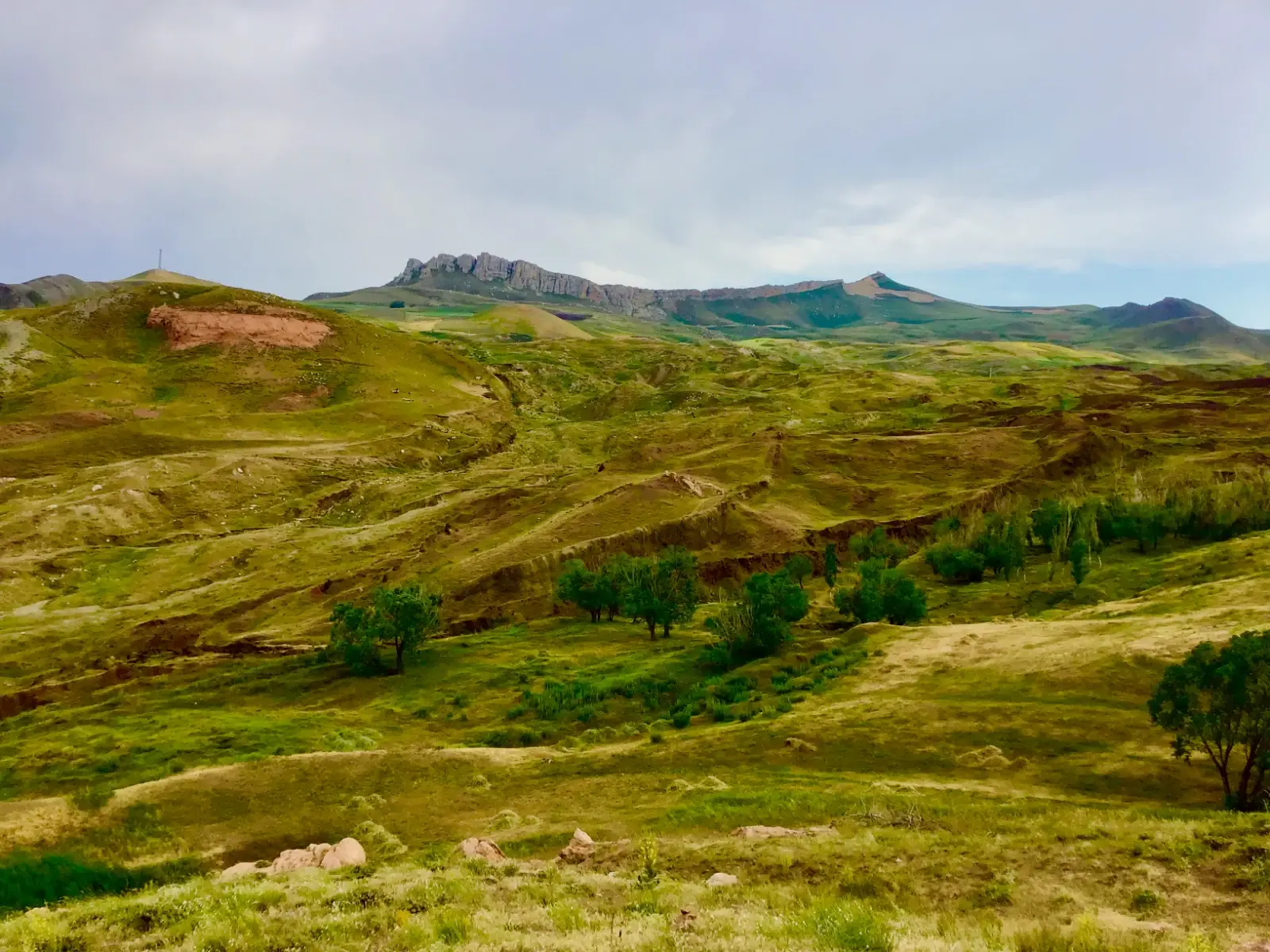
High in eastern Turkey’s Tendürek Mountains, a 515-foot boat-shaped formation has puzzled researchers for 65 years. In September 2026, university archaeologists began direct core drilling for the first time since 1988. Discover what was actually recovered, how Collins and Fasold exposed early claims, and the falsifiable test awaiting 2027 lab results.
Recommended Stories Across Beyond Bharat
Interdisciplinary explorations across metallurgy, astronomy, living sacred geometry, and world connections.
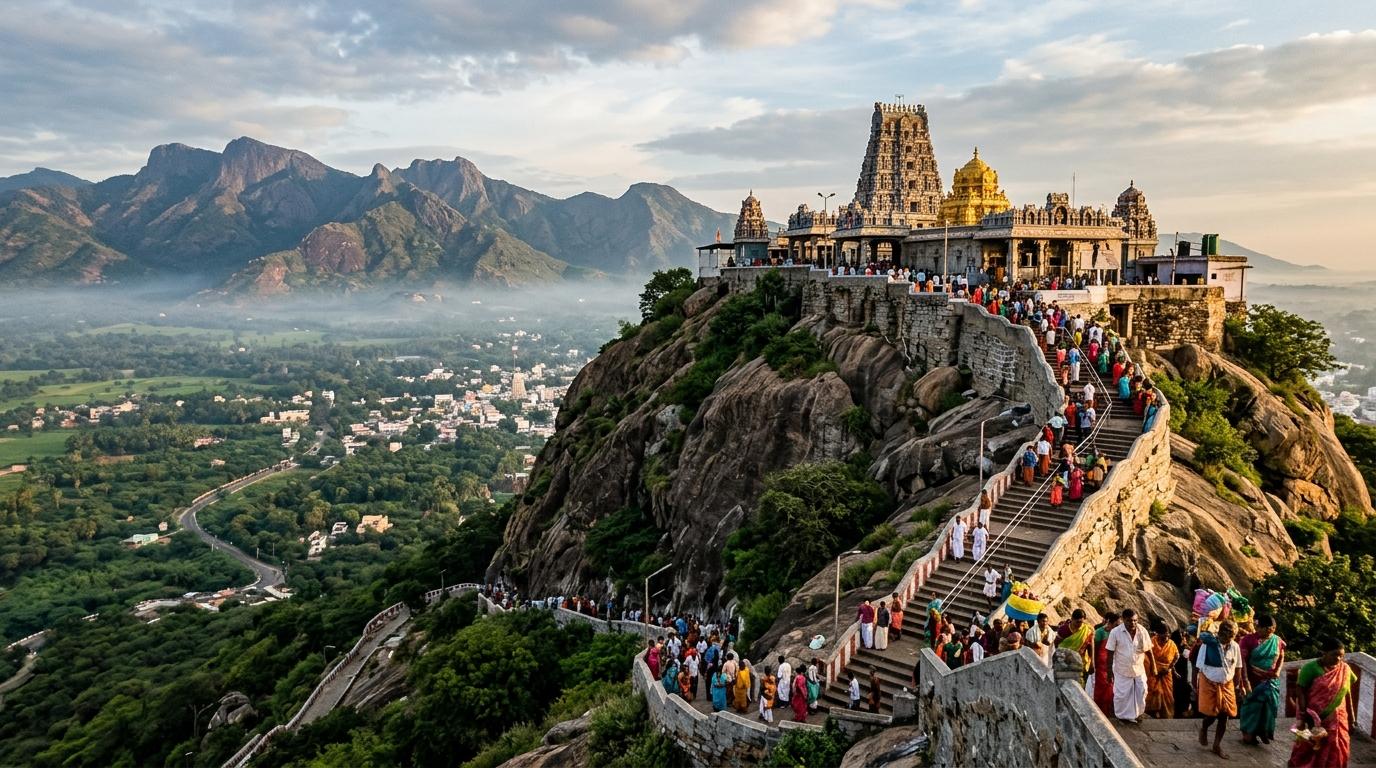
Atop the sacred Sivagiri hill in Palani, Tamil Nadu, stands an ancient idol crafted not from stone or bronze, but from Navapashanam—an alchemical matrix of nine deadly poisons solidified by Sage Bogar. Discover the hidden chemistry, the healing powers of the overnight sandal paste and abhishekam prasadam, the subterranean tunnel connecting Bogar's samadhi, and the controversial 2004 replacement that triggered an international antiquities investigation.
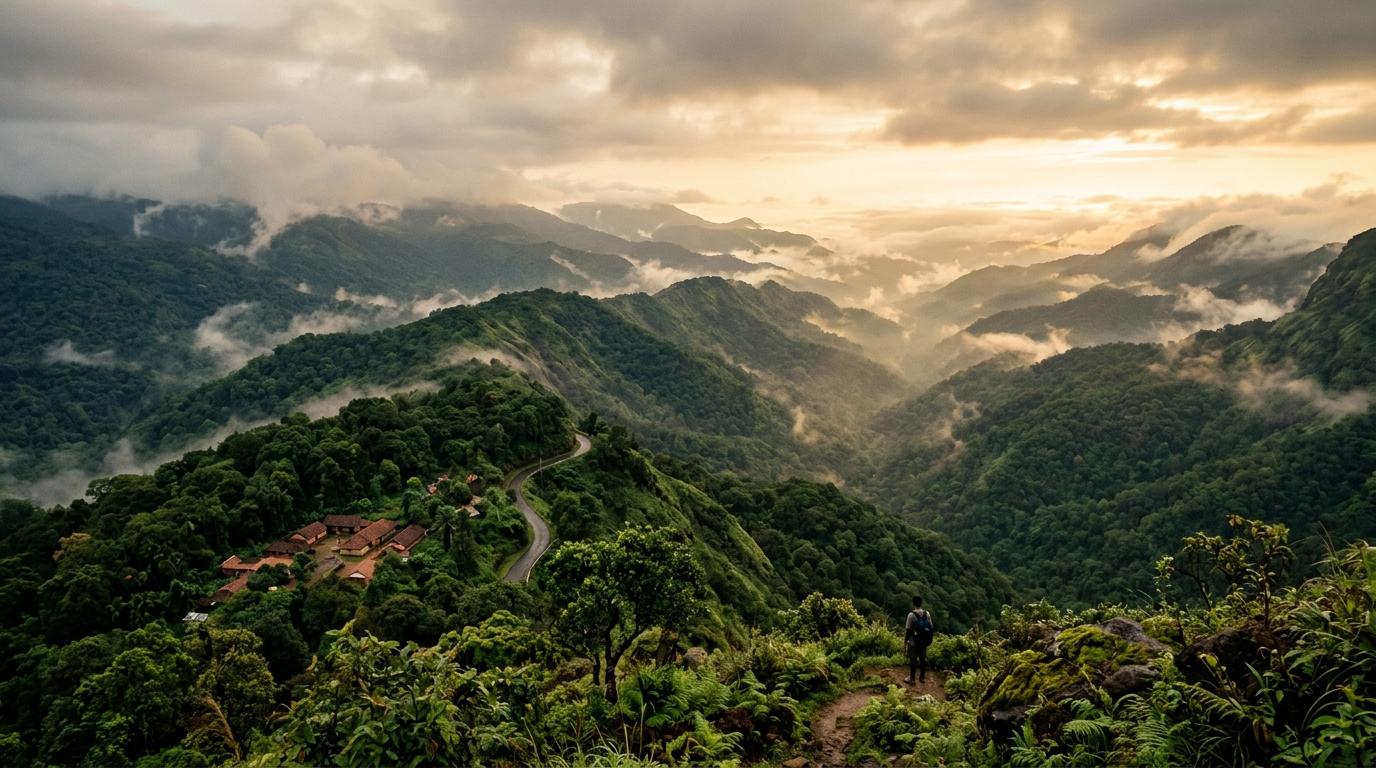
Coorg's hillside resorts book out months in advance now. Gokarna's main beach can feel more like a queue than a shoreline, and Hampi comes with tour buses in equal measure. But Karnataka's Malnad hill country and coastal belt hold a genuinely different kind of trip: rainforest instead of resort, empty tide lines instead of beach shacks, and moss-draped forts you'll have mostly to yourself. Discover 7 secret places in Karnataka that redefine South Indian travel.
Whether you crave snowy Himalayan walks, candlelit palace reflections across Lake Pichola, high-energy beach parties in Goa, colonial carnival effigies in Fort Kochi, or tropical isolation in the Andamans, India offers an astonishing spectrum of year-end celebrations. Discover five magical destinations to spend Christmas and New Year.
There is a particular kind of vertigo that comes from standing on what looks like an unremarkable stretch of bare, reddish rock on India’s western coast, and only realising — often only once you see a drone photograph — that you are standing directly on top of an elephant the size of a basketball court.
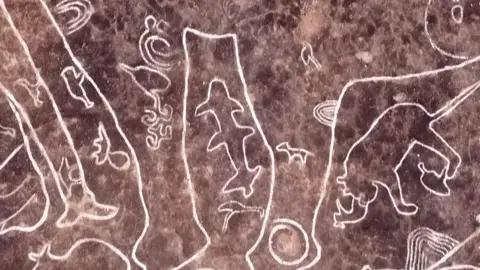
This is the Kasheli geoglyph, in Maharashtra’s Ratnagiri district: a 13-by-18-metre outline of an elephant carved directly into flat laterite bedrock, with somewhere between 70 and 82 smaller animal figures worked into and around its silhouette — sharks, stingrays, tigers, monkeys, wild boar, rhinoceros, peacocks. Discovered only in May 2016, it is one of several hundred such carvings scattered across roughly 70 sites along the Konkan coast of Maharashtra and Goa, representing something genuinely unusual in the global story of prehistoric art.
Archaeological Dossier: The Konkan Geoglyphs
Geographic Horizon
Ratnagiri & Sindhudurg (Maharashtra / Goa)
Rock Canvas
Exposed Laterite Plateaus (Sadas)
Key Masterpiece
Kasheli Elephant (13m × 18m, 70+ motifs)
Cultural Phase
Pre-agricultural Mesolithic to Early Holocene
Faunal Anomalies
Rhinoceros, Hippopotamus & Pelagic Marine Life
International Status
UNESCO World Heritage Tentative List (2022)
Why "Geoglyphs" and Not Cave Paintings
Almost every famous piece of Indian prehistoric rock art — the Bhimbetka shelters, for instance — was made inside caves or rock overhangs, protected from weather and painted rather than carved. The Konkan sites are a different creature entirely. They are geoglyphs: images cut, scooped, and abraded directly into open, horizontal plateaus of laterite rock, known locally as sadas — exposed to sun, monsoon, and centuries of erosion, with no cave roof protecting them at all.
The Animals That Shouldn’t Be There
Here is where the story gets genuinely strange. Among the animals depicted across the Konkan sites are rhinoceroses and hippopotamuses — species that have no natural presence anywhere near the Konkan coast today, and which paleontological records indicate vanished from this part of India roughly 30,000 years ago. Their appearance suggests either a substantially wetter regional paleoclimate with marshlands, or communities preserving vivid generational memory of these megafauna.
The vast, wind-scoured laterite sadas of the Konkan coastline, where ancient incisions remain carved into red volcanic stone.Photo: Maharashtra Directorate of Archaeology and Museums Archive
The Barsu "Master of Animals" — And a Crucial Correction
A short distance from Kasheli, the Barsu plateau holds its own remarkable composition: a semi-abstract figure of a human, around four metres tall, flanked by two even larger tiger-like animals held firmly by the throat. Local villagers, before its significance was recognised, read the shapes as boats, christening the site Tarawacha Sada ("Boats Plateau").
“The Barsu composition echoes the standing "Master of Animals" motif — a human figure dominating a pair of powerful predators — reflecting an archetypal relationship between humans and wild nature that transcends regional boundaries.”
Comparative Epigraphical Analysis — Directorate of Archaeology & Museums, Maharashtra
How Old, Really? Dating Challenges in Laterite
When Maharashtra’s state archaeology director, Tejas Garge, first discussed the sites publicly, he described the 10,000 BCE estimate explicitly as "our first deduction" — a preliminary working hypothesis, not a laboratory-confirmed date. Other sources, citing the depicted extinct megafauna, push the horizon back toward 20,000 years, while UNESCO’s tentative-list dossier characterizes the tradition as roughly 12,000 years old. Laterite bedrock lacks organic inclusions and is notoriously difficult to date radiometrically, making absolute chronometry an open scientific challenge.
Chronological Context of the Konkan Geoglyphs
c. 30,000 BP
Pleistocene Megafaunal Presence
Rhinoceroses and hippopotamuses inhabit coastal western peninsular India before regional extinction.
c. 10,000 – 8,000 BCE
Mesolithic Bedrock Engraving
Hunter-gatherers carve monumental animal outlines and mythological compositions into laterite sadas.
May 2016
Kasheli Elephant Discovery
Local researchers document the 13x18m elephant containing 70+ interior animal motifs in Ratnagiri.
April 2022
UNESCO Tentative List Inscription
The Geoglyphs of Konkan Region are officially nominated to India’s UNESCO World Heritage tentative list.
A Threat That Hasn’t Fully Resolved
Since 2015, a proposed $70 billion mega oil refinery project involving IOCL, BPCL, HPCL, and Saudi Aramco moved between locations in Ratnagiri district — initially at Nanar (abandoned in 2019 following fierce local opposition) and subsequently at Barsu-Solgaon, directly adjacent to significant petroglyph clusters. Archaeologists, environmentalists, and local mango and fishing communities have opposed the project due to irreversible damage to laterite bedrock, Alphonso orchards, and marine ecology. Following intense April 2023 protests and the tragic killing of journalist Shashikant Warishe, the refinery’s final location remains an unresolved negotiation.
Heritage Preservation vs. Petrochemical Infrastructure
Legal Status:State Protected Monuments & UNESCO World Heritage Tentative List (April 2022)
Geological Impact:Vulnerable porous laterite susceptible to irreversible fracturing from industrial tremors
Current Disposition:Active global academic advocacy; rigorous heritage buffer zone demands
Proposed Barsu Mega Refinery
Primary Value:Strategic national petrochemical refining hub (60 MMTPA capacity)
Legal Status:Joint venture between Indian public sector oil firms & Saudi Aramco
Geological Impact:Demands expansive flat plateau terrain for refinery infrastructure
Current Disposition:Surveys paused; alternative site explorations in progress
Scholarly Frequently Asked Questions
What is a "sada" in the Konkan landscape?▼
A sada is an expansive, flat laterite plateau formed by tropical weathering. Bare of tall trees during dry months, it provided prehistoric artists with vast natural stone canvases.
Why are marine creatures carved inside an elephant at Kasheli?▼
Archaeologists speculate this reflects a unified cosmological worldview blending marine and terrestrial ecosystems, as the hunter-gatherers exploited both littoral coastal waters and inland forests.
Are the Konkan geoglyphs protected by UNESCO?▼
They were placed on India’s UNESCO World Heritage Tentative List in April 2022. Final inscription requires completing comprehensive conservation management plans.
Explore Related Inquiries into Indian Archaeology & Antiquity