Ash and Stone: What Jwalapuram Reveals About Surviving a Supervolcano
Roughly 74,000 years ago, Mount Toba’s colossal eruption blanketed Asia in volcanic winter. In Andhra Pradesh’s Jurreru River valley, deep deposits of ash and Middle Palaeolithic stone tools challenge long-held theories of human near-extinction.
Roughly 74,000 years ago, Mount Toba erupted with catastrophic force, triggering a decade-long volcanic winter and inspiring the theory that humanity was pushed to the brink of extinction. In Andhra Pradesh's Jurreru River valley, excavations at Jwalapuram have spent two decades challenging that narrative — revealing Middle Palaeolithic stone tools buried directly beneath, and preserved above, metres of volcanic ash.
Aakash Bhagat
Founder & Editor
•Updated September 24, 2026•8 min read
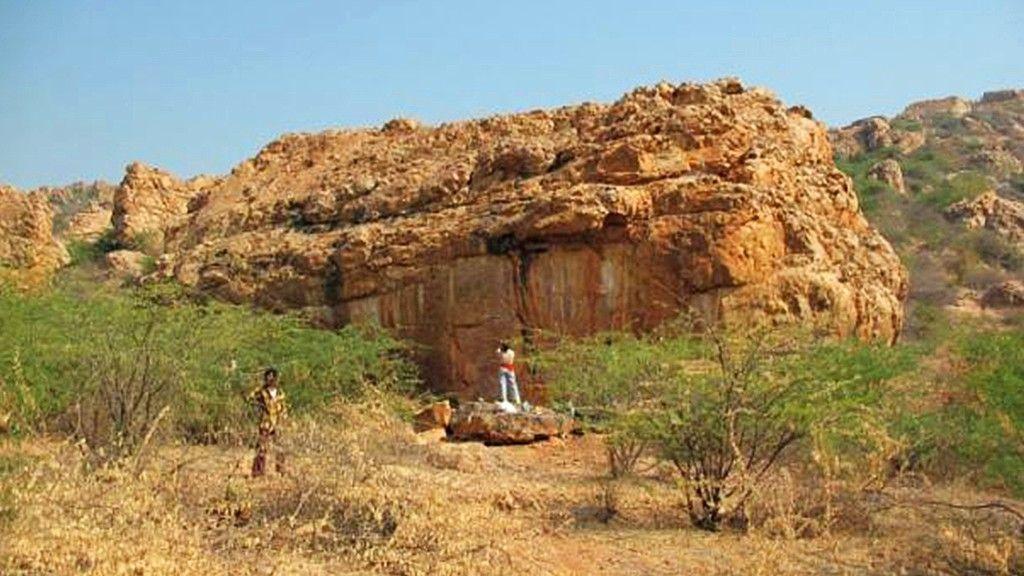
Stratified sedimentary beds and ancient river valley sediments in peninsular India, akin to the Jurreru River valley excavations at Jwalapuram.Archaeological Archives
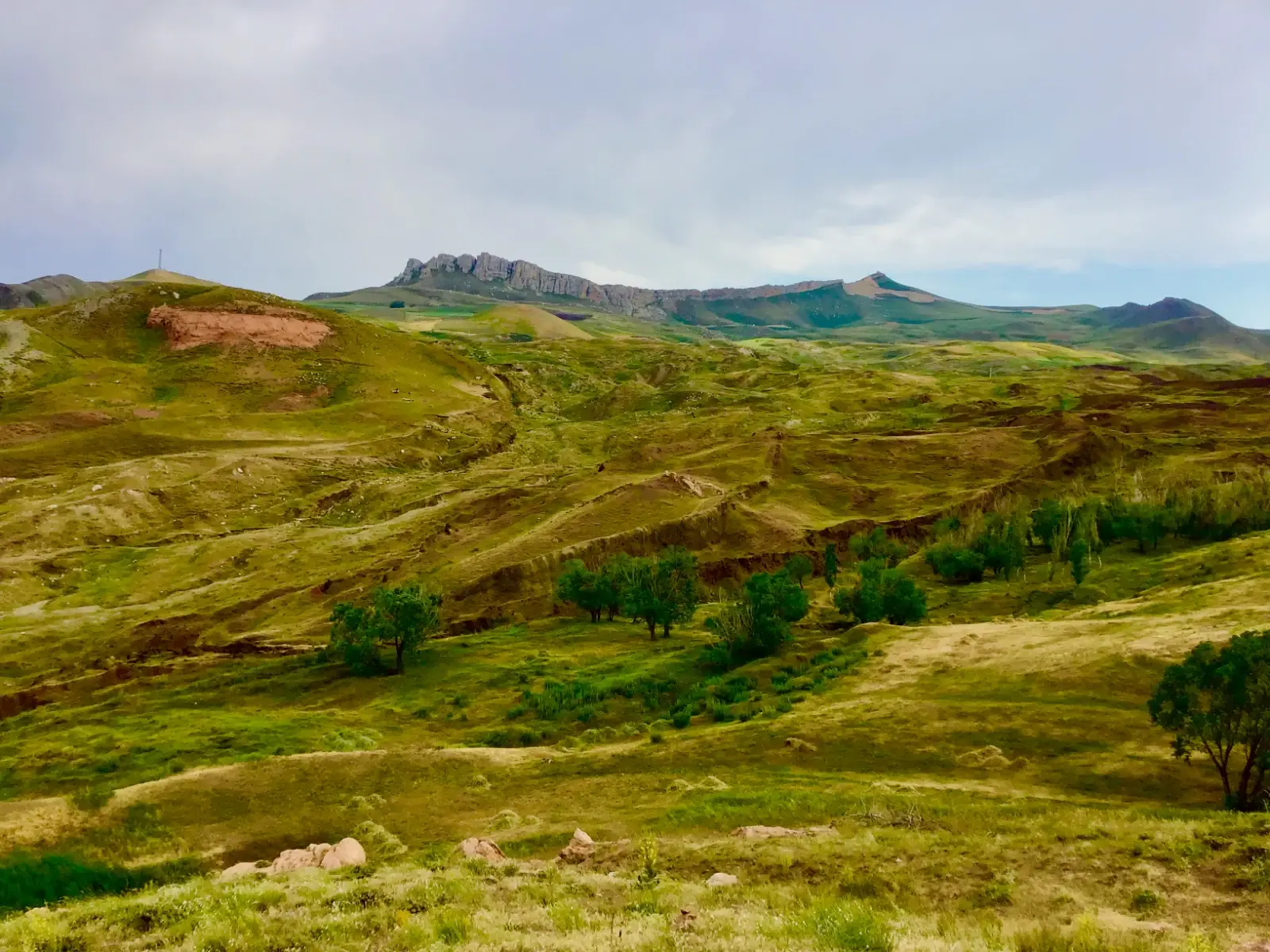
High in eastern Turkey’s Tendürek Mountains, a 515-foot boat-shaped formation has puzzled researchers for 65 years. In September 2026, university archaeologists began direct core drilling for the first time since 1988. Discover what was actually recovered, how Collins and Fasold exposed early claims, and the falsifiable test awaiting 2027 lab results.
Atop the sacred Sivagiri hill in Palani, Tamil Nadu, stands an ancient idol crafted not from stone or bronze, but from Navapashanam—an alchemical matrix of nine deadly poisons solidified by Sage Bogar. Discover the hidden chemistry, the healing powers of the overnight sandal paste and abhishekam prasadam, the subterranean tunnel connecting Bogar's samadhi, and the controversial 2004 replacement that triggered an international antiquities investigation.
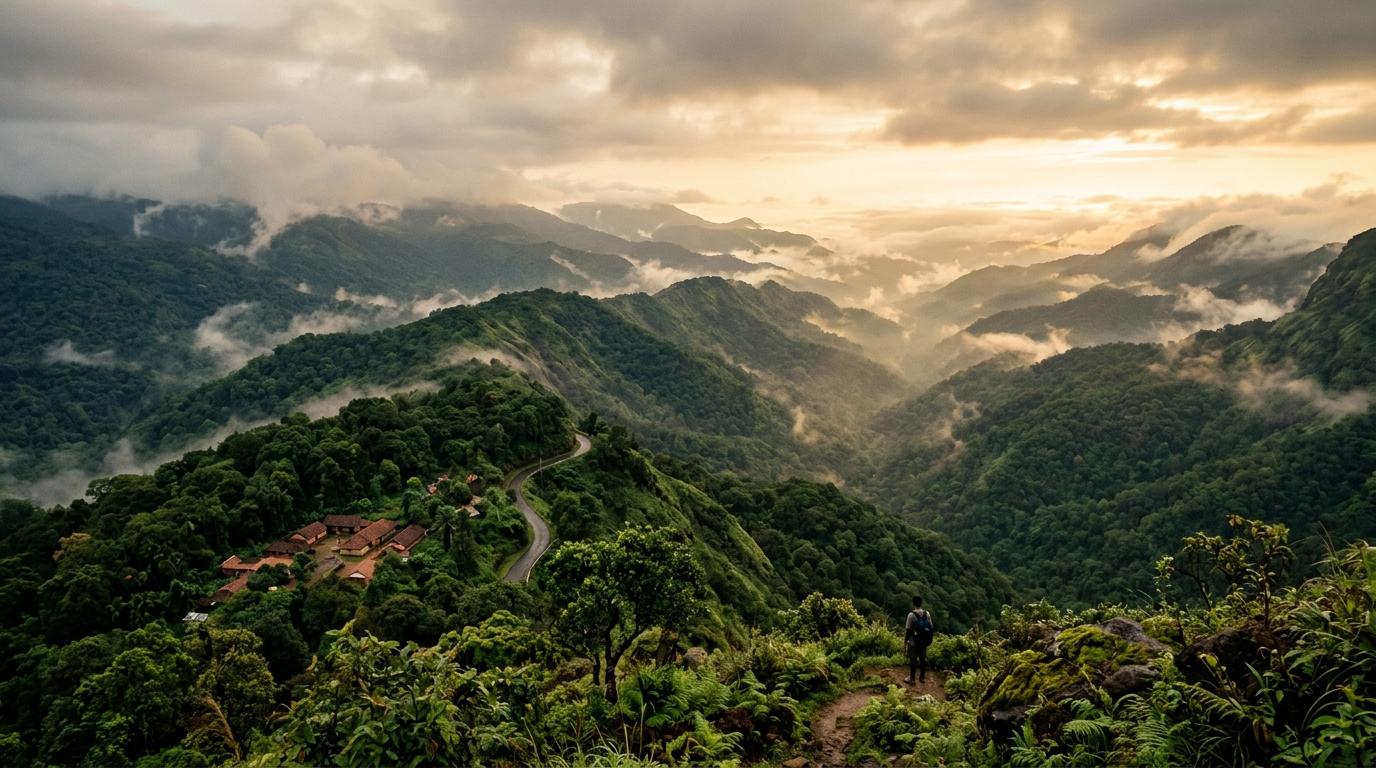
Coorg's hillside resorts book out months in advance now. Gokarna's main beach can feel more like a queue than a shoreline, and Hampi comes with tour buses in equal measure. But Karnataka's Malnad hill country and coastal belt hold a genuinely different kind of trip: rainforest instead of resort, empty tide lines instead of beach shacks, and moss-draped forts you'll have mostly to yourself. Discover 7 secret places in Karnataka that redefine South Indian travel.
Whether you crave snowy Himalayan walks, candlelit palace reflections across Lake Pichola, high-energy beach parties in Goa, colonial carnival effigies in Fort Kochi, or tropical isolation in the Andamans, India offers an astonishing spectrum of year-end celebrations. Discover five magical destinations to spend Christmas and New Year.
Roughly 74,000 years ago, a volcano on the island of Sumatra did something no eruption in recorded human history has come close to matching. Mount Toba's eruption — estimated at around 2,800 cubic kilometres of ejected material — didn't just reshape the local landscape; it blanketed a swath of Asia in ash and, by some reconstructions, triggered a volcanic winter lasting roughly six to ten years. For decades, this event anchored one of the more dramatic hypotheses in human evolution: the Toba catastrophe theory, which proposed that the eruption nearly wiped out our species, collapsing the human population down to a genetic bottleneck of perhaps only a few thousand individuals worldwide.
It's a genuinely gripping story. It's also a story that a quiet valley in Andhra Pradesh's Kurnool district (part of what is now Nandyal district, following a 2016 administrative reorganisation) has spent the past two decades complicating.
Archaeological Dossier: Jwalapuram Locality 22
Geographic Location
Jurreru River Valley, Kurnool / Nandyal District, Andhra Pradesh
Prof. Ravi Korisettar & Prof. Michael Petraglia (Science 2007)
What the Ground Actually Contains
In 2007, an international team led by Ravi Korisettar and Michael Petraglia began excavating a site called Jwalapuram, in the Jurreru River valley. What they found, layered directly into the sediment, was a thick deposit of volcanic ash — reported at up to two metres deep in places — chemically confirmed as tephra from Toba's Youngest Toba Tuff eruption. That in itself was a significant geological find. What made it archaeologically extraordinary was what sat immediately below and, in later layers, above it: worked stone tools, more than 1,600 artefacts at one excavated locality alone, belonging to the Indian Middle Palaeolithic tradition.
Sediment dating (optically stimulated luminescence, a technique that measures when buried mineral grains were last exposed to sunlight) placed tool-bearing layers directly beneath the ash as having been occupied closely before the eruption — meaning people were living in this valley, making and using recognisably sophisticated flaked-stone tools, right up until the sky over South Asia went dark.
The "Cultural Continuity" Claim — and a Necessary Correction
The initial 2007 announcement, and much of the popular coverage that followed, framed the story in strikingly clean terms: tools below the ash and tools immediately above it looked essentially identical, meaning the toolmakers survived the eruption itself, uninterrupted, without so much as a change in their technology. It's a compelling image — human ingenuity shrugging off a planetary catastrophe without missing a beat.
The fuller picture, established in follow-up research published in 2011 (Haslam, Petraglia, Korisettar, and colleagues, in Quaternary International), is more nuanced, and worth stating honestly rather than repeating the simplified version. Detailed OSL dating of the sediment sequence above the ash at Locality 22 identified a local sedimentation gap of roughly 35,000 years following the eruption — meaning that, at this specific location, the record doesn't show continuous, layer-by-layer human presence bridging the eruption itself. What can genuinely be said is this: essentially identical Middle Palaeolithic tool technology is present both immediately before the eruption and, tens of thousands of years later, in the region's subsequent occupation layers — a real and striking continuity in technological tradition over an enormous span of time, even if it doesn't prove uninterrupted, generation-by-generation habitation of this exact spot through the eruption event itself. It's a subtler, and in some ways more interesting, finding than "they didn't even flinch" — it suggests deep cultural persistence and adaptive resilience across South Asia as a whole, argued from the broader pattern of similar tools recurring at multiple sites and periods, rather than one unbroken sequence frozen in a single valley.
The Toba Bottleneck Hypothesis vs. Archaeological Evidence
Classic Bottleneck Theory (Ambrose 1998)
Global Human Population:Species collapsed down to 3,000–10,000 breeding individuals worldwide
Volcanic Winter Impact:Decade-long planetary freeze causing total ecological wipeout
Lithic Technology:Complete cultural and demographic extinction in South Asia
Out-of-Africa Timeline:Late single-wave dispersal along coastal routes after 60,000 BP
Jwalapuram Excavations (2007–2011)
Global Human Population:Subcontinental populations endured; technological tradition remained intact
Volcanic Winter Impact:Ash blanketed valleys, but river systems served as survivable refugia
Lithic Technology:Pre- and post-Toba Middle Palaeolithic flaked tools are virtually identical
Out-of-Africa Timeline:Early human presence in inland India proposed at 100,000–120,000 BP
Who Made Them?
Here the mystery is genuine and, as far as the evidence goes, unresolved. Kurnool's acidic soil has destroyed any organic material that might once have been present at Jwalapuram — no bones, no teeth, no DNA. The hominin identity of the toolmakers has to be inferred entirely from the stone tools themselves, and the published technical assessment is careful on this point: the tool technology is "most consistent with contemporaneous Homo sapiens technologies" found in Africa and regions to the east of South Asia during the same period — a reasonable inference from comparative typology, not a confirmed identification.
The stakes of that inference are significant for the "Out of Africa" migration debate. Korisettar and Petraglia have argued, on the strength of this and related South Asian evidence, that modern humans may have reached India as early as 100,000 to 120,000 years ago — considerably earlier than the migration models that were standard when their 2007 paper (published in Science) first appeared. This remains, by the researchers' own account, a genuinely contested claim within the field — not because the stone tools are in doubt, but because attributing a specific hominin species to an assemblage of tools alone, with no skeletal or genetic evidence, is inherently a matter of informed inference rather than certainty.
The semi-arid terrains of peninsular India, where ancient river basins sheltered early hominin communities during Pleistocene climatic turbulence.Photo: Geological Field Archive
Life After the Ash
Whatever happened in the immediate aftermath of the eruption, the valley's later archaeological layers tell a clear story of adaptation. As the post-Toba climate in the region grew drier and more arid, the stone tool tradition itself changed: broad Middle Palaeolithic flakes gave way, in layers dated to roughly 35,000–40,000 years ago, to microliths — small, precisely shaped geometric stone blades, designed to be hafted in combination onto wooden or bone shafts. This is a technology associated with a more mobile, more specialised hunting strategy, well suited to pursuing faster, more dispersed game across an increasingly open, arid landscape. It's worth noting that this later date range sits right around where the sedimentation gap identified in the 2011 study ends — the microlith layers likely represent the point at which a continuous local sedimentary and occupational record resumes, rather than an immediate post-eruption response.
Deep-Time Stratigraphy: Mount Toba & Jwalapuram Record
c. 120,000 – 100,000 BP
Earliest Hypothesized Ingress
Early modern human lineages potentially enter the Indian subcontinent via northern and inland river systems.
c. 77,000 – 74,000 BP
Pre-Eruption Jurreru Habitation
Hunter-gatherers manufacture Middle Palaeolithic flaked tools along Jurreru River gravels, sealed under future ash.
c. 74,000 BP
The Toba Super-Eruption
Mount Toba explodes in Sumatra; over 2,800 km³ of pyroclastic tephra blankets South Asia in up to 2m of ash.
c. 74,000 – 38,000 BP
Local Sedimentation Hiatus
Locality 22 undergoes a 35,000-year depositional hiatus; regional tool traditions persist across peninsular India.
c. 38,000 – 35,000 BP
Microlithic Innovation & Resumption
Sedimentation resumes with the appearance of delicate geometric microliths suited for arid game hunting.
2007 – 2011
Landmark Excavations & OSL Papers
Korisettar & Petraglia reveal Jwalapuram in Science (2007) and clarify stratigraphy in Quaternary International (2011).
A Site Still Under Threat — Right Now
It would be a disservice to this story to treat Jwalapuram purely as settled history. As of 2025, reporting from the region describes an active and ongoing threat to the site: informal "sand mafia" operations have been mining and selling the ancient sand dunes that contain the Toba ash deposits, at roughly ₹1,000 per tonne, for commercial use — despite the site's global scientific significance. Korisettar himself has noted that although the groundbreaking research here was conducted well over a decade ago, no government body has taken meaningful steps to formally protect any portion of the site. Jwalapuram, in other words, is not a monument behind a fence — it's an active excavation site slowly being sold off, tonne by tonne, even as the questions it raised remain open.
“Jwalapuram is not a monument behind a fence — it is an active excavation site slowly being sold off, tonne by tonne, even as the fundamental questions it raised about human resilience remain open.”
Prof. Ravi Korisettar — Co-Director of Jwalapuram Excavations, Karnatak University
Why It Still Matters
What makes Jwalapuram genuinely significant isn't a tidy story of humans effortlessly outlasting a supervolcano — the real evidence is more careful and, arguably, more impressive than that. It shows a Middle Palaeolithic toolmaking tradition persisting across one of the largest volcanic events in Earth's recent history, evidence that at minimum complicates the idea of Toba as an unambiguous, near-extinction bottleneck for humanity, and a set of stone tools that may push the arrival of modern humans in South Asia back by tens of thousands of years — all built on inference from flaked stone alone, since the bones that might once have settled the question were lost to acid soil long before anyone thought to dig.
Scholarly Frequently Asked Questions
What was discovered at the Jwalapuram archaeological site?▼
Excavators unearthed more than 1,600 Middle Palaeolithic stone tools stratified immediately beneath and above a 2-metre deposit of volcanic ash, chemically traced to the Youngest Toba Tuff eruption 74,000 years ago.
Did humans in India survive the Mount Toba supervolcano?▼
Yes. Although a 35,000-year local sedimentation hiatus exists at Locality 22, essentially identical Middle Palaeolithic tool traditions recur across peninsular India before and long after the eruption, demonstrating cultural persistence rather than demographic extinction.
Why are there no fossilized human bones at Jwalapuram?▼
The acidic chemistry of the Kurnool soil decomposed all organic skeletal remains, teeth, and ancient DNA over 70,000+ years. Hominin identity must therefore be inferred from typological analysis of the stone tools.
How does Jwalapuram challenge the "Out of Africa" migration timeline?▼
If the toolmakers were modern Homo sapiens, their established presence prior to 74,000 BP suggests modern humans arrived in India between 100,000 and 120,000 years ago — far earlier than the standard 60,000-year single-wave migration theory.
What current threat does Jwalapuram face?▼
Informal commercial sand mining operations are actively quarrying the ancient sand dunes and ash beds at approximately ₹1,000 per tonne, threatening unexcavated prehistoric strata due to lack of formal statutory protection.
Explore Related Inquiries into Indian Archaeology & Antiquity