7 Secret Places in Karnataka That Prove You Don't Need to Visit Coorg or Hampi Again
Rainforest instead of resort, bioluminescent tide lines instead of beach shacks, and forgotten forts reclaimed by the Western Ghats: why Karnataka's Malnad and coastal frontiers offer a genuinely deeper journey.
Coorg's hillside resorts book out months in advance now. Gokarna's main beach can feel more like a queue than a shoreline, and Hampi comes with tour buses in equal measure. But Karnataka's Malnad hill country and coastal belt hold a genuinely different kind of trip: rainforest instead of resort, empty tide lines instead of beach shacks, and moss-draped forts you'll have mostly to yourself. Discover 7 secret places in Karnataka that redefine South Indian travel.
Aakash Bhagat
Founder & Editor
•Updated September 25, 2026•7 min read
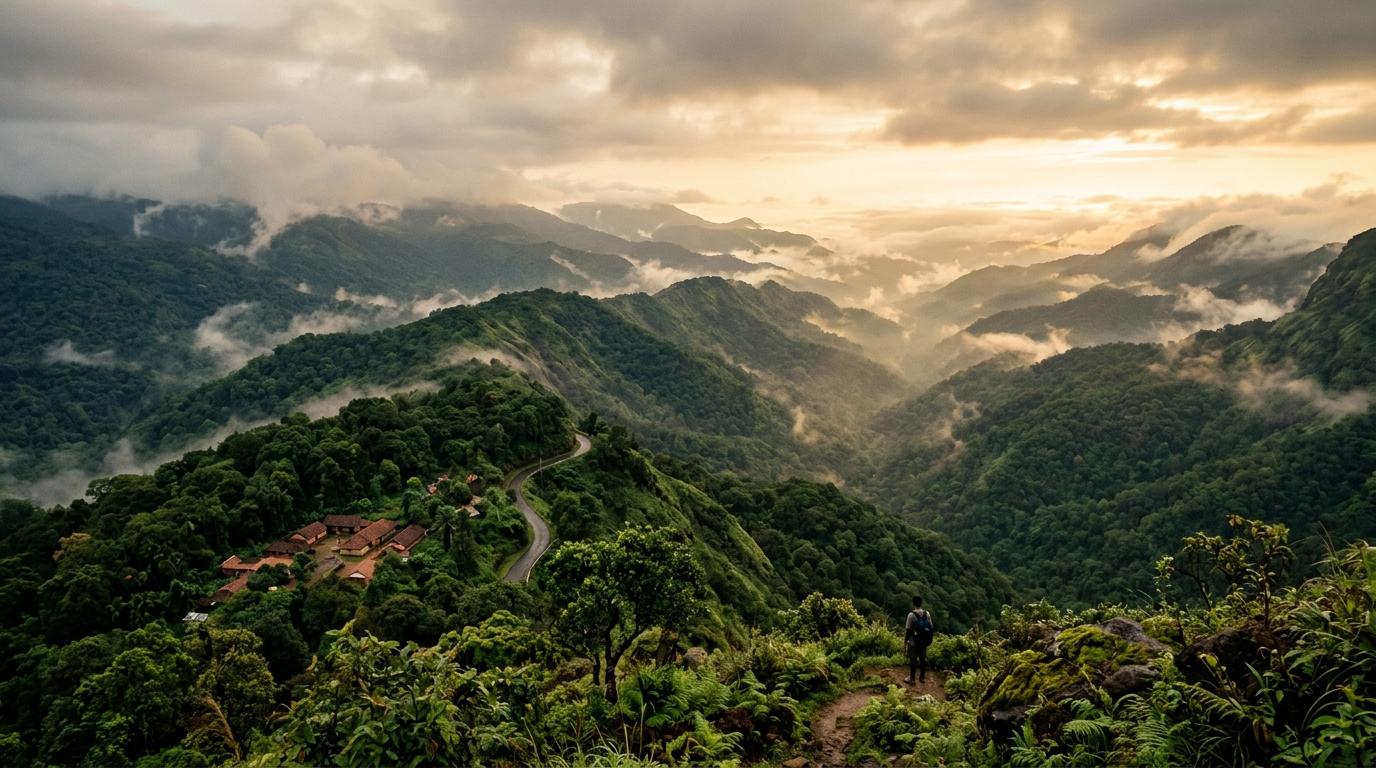
Misty folds of the Western Ghats along Karnataka's Malnad corridor at dawn, where dense rainforest canopies meet secluded mountain trails far from commercial tourism.Archaeological Archives
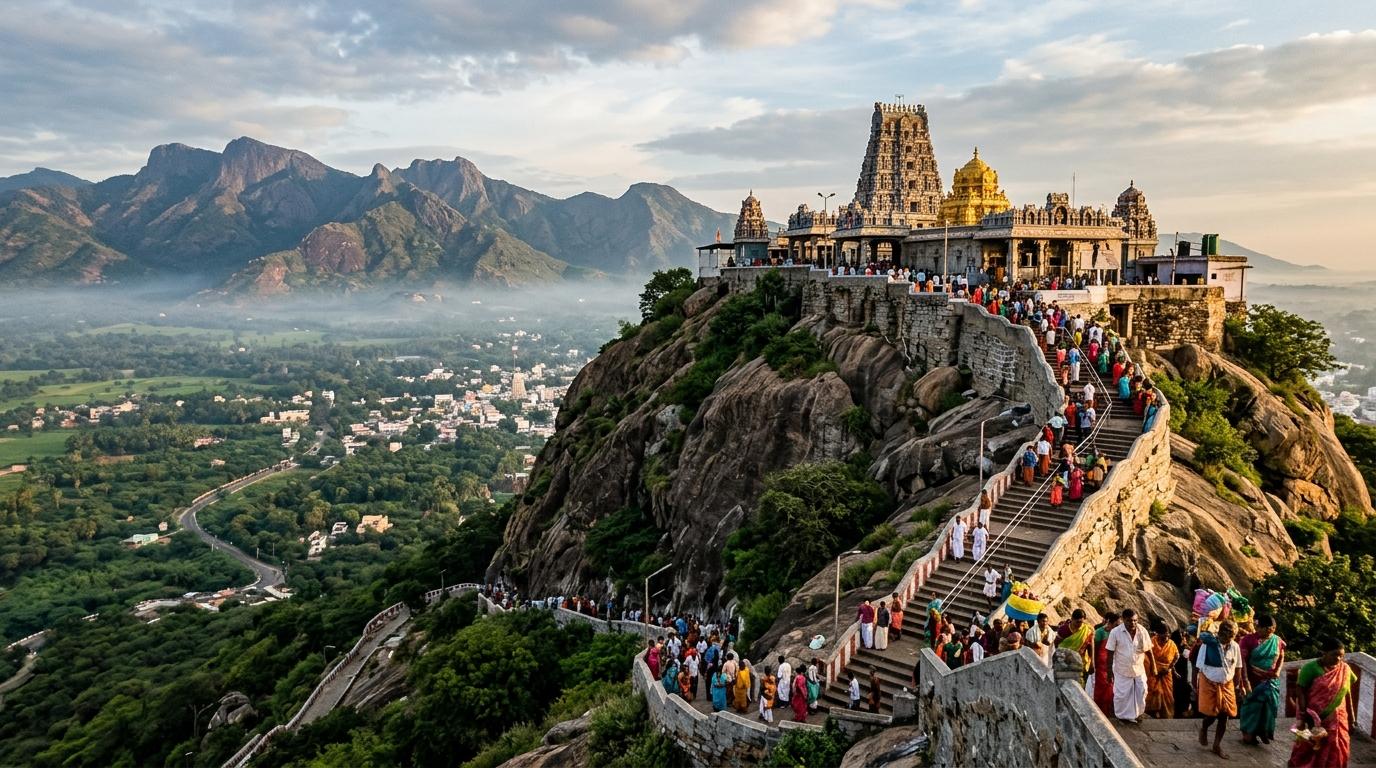
Atop the sacred Sivagiri hill in Palani, Tamil Nadu, stands an ancient idol crafted not from stone or bronze, but from Navapashanam—an alchemical matrix of nine deadly poisons solidified by Sage Bogar. Discover the hidden chemistry, the healing powers of the overnight sandal paste and abhishekam prasadam, the subterranean tunnel connecting Bogar's samadhi, and the controversial 2004 replacement that triggered an international antiquities investigation.
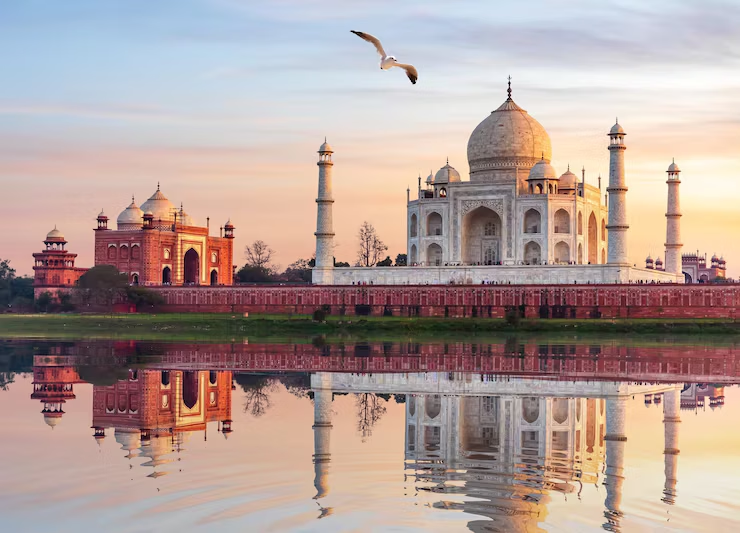
Whether you crave snowy Himalayan walks, candlelit palace reflections across Lake Pichola, high-energy beach parties in Goa, colonial carnival effigies in Fort Kochi, or tropical isolation in the Andamans, India offers an astonishing spectrum of year-end celebrations. Discover five magical destinations to spend Christmas and New Year.
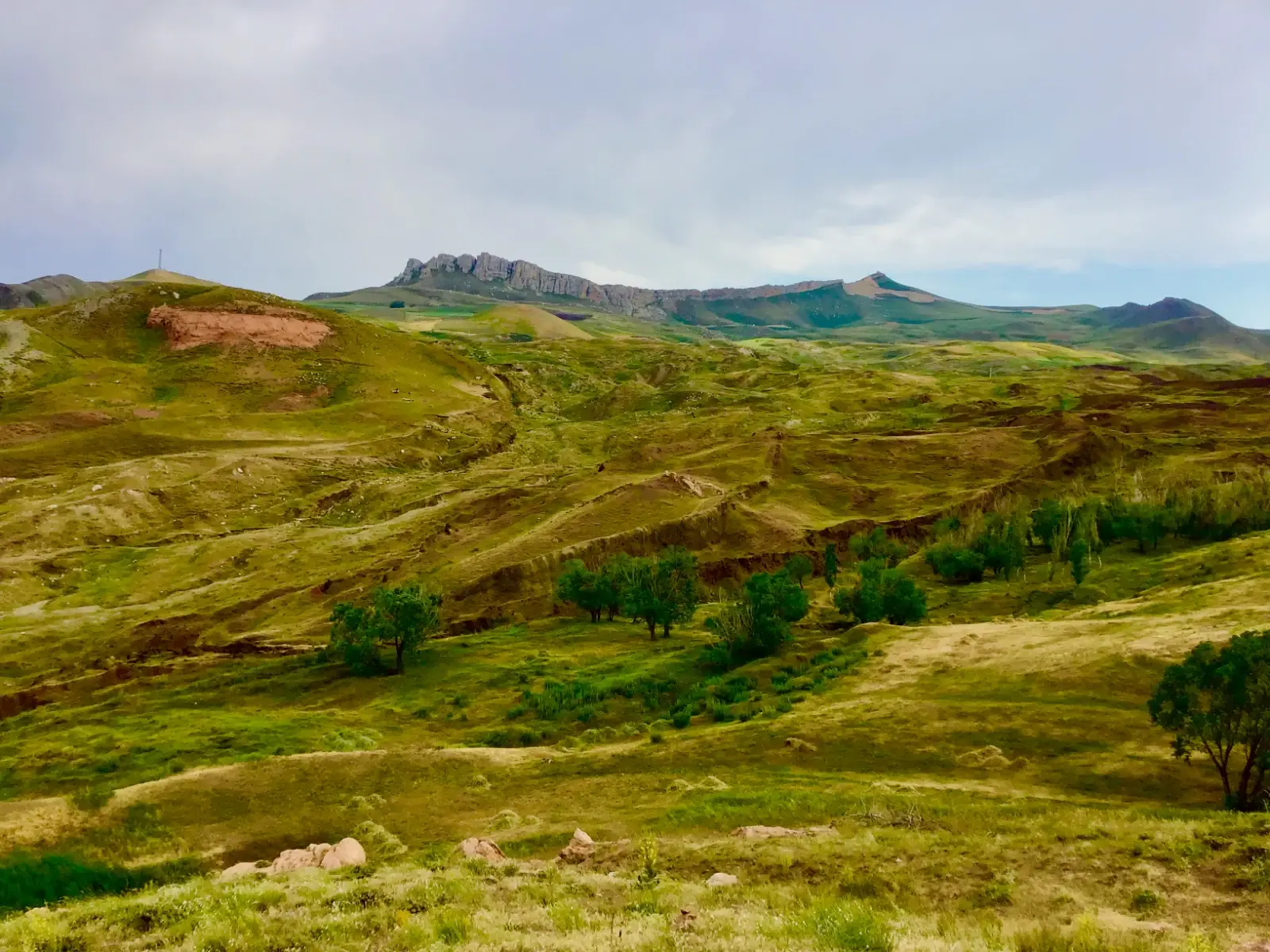
High in eastern Turkey’s Tendürek Mountains, a 515-foot boat-shaped formation has puzzled researchers for 65 years. In September 2026, university archaeologists began direct core drilling for the first time since 1988. Discover what was actually recovered, how Collins and Fasold exposed early claims, and the falsifiable test awaiting 2027 lab results.
Long before dinosaurs, trees, or atmospheric oxygen, primitive microbial life was already thriving on Earth. In 2026, geologists analyzing 3.497-billion-year-old chert from Jharkhand's Singhbhum Craton discovered organic carbon biosignatures and direct zircon dates — providing a rare, pristine glimpse into Earth's earliest biosphere.
Roughly 74,000 years ago, Mount Toba erupted with catastrophic force, triggering a decade-long volcanic winter and inspiring the theory that humanity was pushed to the brink of extinction. In Andhra Pradesh's Jurreru River valley, excavations at Jwalapuram have spent two decades challenging that narrative — revealing Middle Palaeolithic stone tools buried directly beneath, and preserved above, metres of volcanic ash.
Coorg's hillside resorts book out months in advance now. Gokarna's main beach on a December weekend can feel more like a queue than a shoreline. Hampi's boulder-strewn ruins, for all their genuine grandeur, come with tour buses and selfie sticks in equal measure. None of this makes these places any less worth visiting once — but if you've already done the classic Karnataka circuit, or you'd simply rather not fight a crowd for your photograph, the state's Malnad hill country and coastal belt hold a genuinely different kind of trip: rainforest instead of resort, empty tide lines instead of beach shacks, and forts so overgrown you'll have them mostly to yourself.
Quick Travel Digest: Karnataka Offbeat Frontiers
Primary Geographies
Western Ghats (Malnad), Uttara Kannada & Udupi Coast
Key Natural Wonders
King Cobra Rainforests, Karst Monoliths & Glowing Night Waters
Forgotten Heritage
Forest-swallowed Forts of Keladi Nayakas & The Pepper Queen
Prime Travel Months
October through February (Post-monsoon green & dry trails)
Recommended Duration
5 to 7 days slow-travel road trip across Malnad and the coast
Golden Travel Rule
Pack out all waste; hire local indigenous village guides
1. Agumbe: The Rainforest Escape
Agumbe, tucked into the Malenadu region of the Western Ghats in Shivamogga district, has earned the nickname "the Cherrapunji of South India" for genuinely good reason — its average annual rainfall runs somewhere around 7,000 to 8,000 millimetres, putting it among the wettest places in the country. That rainfall sustains a thick, biodiverse rainforest that's home to something Agumbe is quietly famous for among wildlife researchers: a substantial population of king cobras.
Misty canopy and pristine mountain streams of the dense Agumbe rainforest, heart of the Western Ghats King Cobra sanctuary.Photo: Beyond Bharat Archives / Malenadu Field Expedition
Skip the crowded commercial sunset points and head instead to the Agumbe Rainforest Research Station (ARRS), a genuine field conservation site established by herpetologist Romulus Whitaker in the mid-2000s, which conducted the world's first radio-telemetry study on king cobras. ARRS runs education programmes, hosts researchers and volunteers, and offers a legitimately rare chance to learn about king cobra ecology and conservation from people who study them for a living, rather than from a signboard.
2. Yana Caves: The Jurassic Monoliths
Rising abruptly out of dense forest in Uttara Kannada district, the twin black rock formations of Yana — Bhairaveshwara Shikhara (roughly 120 metres tall) and the slightly shorter Mohini Shikhara — are made of genuinely rare karst limestone, a geological anomaly in a landscape otherwise shaped by very different volcanic processes. Local legend ties the formations to Shiva's flight from the demon Bhasmasura and Vishnu's intervention as the enchantress Mohini; a small cave temple with a self-manifested Shiva lingam sits at the base of the taller peak, water dripping onto it naturally from the rock above.
Bhairaveshwara Shikhara rising precipitously above the damp evergreen jungle canopy of Uttara Kannada.Photo: Beyond Bharat Field Dispatch
One correction worth making here, since it affects what you should actually pack: there's no established requirement to go barefoot through the cave complex. If anything, the advice from people who've actually made the trek runs the opposite direction — the stone steps near the temple get genuinely mossy and slick, and sturdy, grippy footwear (not smooth-soled sandals) is the safer choice. Combine the visit with Vibhooti Falls, roughly 8 kilometres away, named for the limestone the water runs past on its way down — a good spot to cool off after the short forest trek up to the peaks.
3. Delta Beach & Mattu Beach: The Quiet Coastline
While North Gokarna fills up with tourists, Udupi's coastline quietly offers something genuinely rarer: Mattu Beach, a narrow spit of land with calm river backwaters on one side and the open Arabian Sea on the other, framed by coconut palms and largely free of commercial development.
Bioluminescent Noctiluca scintillans turning breaking Arabian Sea waves into neon turquoise ribbons along Mattu Beach under a moonless night sky.Photo: Coastal Karnataka Astro & Marine Photography Collective
The bioluminescence claim here is real, not exaggerated — the glow comes from Noctiluca scintillans, a dinoflagellate that emits light when the water is disturbed, and it's become enough of a known phenomenon that local photography groups actively track and share sightings. It's worth being precise about timing, though, since sources genuinely differ on the exact peak window: most describe the best viewing as falling in the winter months (roughly November through February, which conveniently overlaps with the most comfortable weather for a coastal visit), while a smaller number point to the monsoon months instead. What's consistent across every account is that moonless nights give you the best chance — the darker the sky, the more visible the glow.
4. Kavaledurga Fort: The Moss-Covered Ruin
Roughly 18 kilometres from Thirthahalli, Kavaledurga — also known as Bhuvanagiri Fort — is worth a genuine correction in framing: its earliest fortifications do trace back to the 9th century, but the sprawling, multi-layered fort you actually walk through today was substantially built up centuries later, primarily under the Keladi Nayakas from the late 15th through 16th centuries, who made it their fourth and final capital. It later sheltered historical figures including Queen Chennamma in 1677 and the Maratha prince Rajaram in 1689, before falling into the atmospheric, moss-covered ruin it is today.
Weathered stone archways and multi-tiered granite ramparts of Kavaledurga Fort enveloped by Western Ghats cloud cover and emerald moss.Photo: Shivamogga Heritage Documentation Project
Where Chitradurga's fort is bare, sun-exposed stone, Kavaledurga is something closer to a forest reclaiming a fortress — concentric granite walls, temple ruins, and old stone gateways all half-swallowed by Western Ghats foliage and mist. The full trek to the summit runs a genuinely challenging climb (figure two to three hours round trip, more with stops), passing through several distinct fortification tiers before reaching a Shiva temple perched on a boulder at the highest point.
5. Mirjan Fort: The Emerald Citadel of the Pepper Queen
Located on the quiet banks of the Aganashini River near Kumta, Mirjan Fort stands as one of coastal India's most architecturally astonishing fortifications — yet it is routinely bypassed by travelers rushing between Goa and Murudeshwar. Built from deep ochre laterite stone, its monumental circular bastions, high battlements, and labyrinthine secret passages look like something transported from medieval Ireland or Scotland, especially during the post-monsoon months when thick emerald moss carpets every surface of the stone.
Monumental laterite stone bastions and moat canals of Mirjan Fort, preserved in secluded coastal green solitude.Photo: Uttara Kannada Historical Survey
The fort's defining chapter belongs to Queen Chennabhairadevi, the legendary 16th-century Jain monarch of the Saluva dynasty who ruled Gerusoppa for an extraordinary 54 years — one of the longest reigns by any female sovereign in Indian history. The Portuguese, who depended entirely on her maritime trade agreements for high-grade Malabar black pepper, respectfully christened her "Raina da Pimenta" (The Pepper Queen). Under her rule, Mirjan served as an impregnable defense stronghold and trans-shipment hub for pepper, cinnamon, and nutmeg bound for Europe, Egypt, and Gujarat.
6. Ballalarayana Durga & Rani Jhari: The Cloud-Kissed Western Ghats Ridge
If Coorg's coffee-plantation estates have begun to feel too manicured and commercial, the windswept Shola ridges around Mudigere in Chikkamagaluru district offer the antidote. Perched on an isolated precipice 1,500 metres above sea level, Ballalarayana Durga was constructed in the 12th century by the Hoysala dynasty as a strategic border outpost watching over the coastal lowlands of Dakshina Kannada.
The dramatic cliff-edge stone ruins of Ballalarayana Durga overlooking a vast sea of clouds and rolling Shola grasslands.Photo: Chikkamagaluru Mountain Trekkers Association
The fort itself is today an open, atmospheric ruin where stone archways and collapsed stone ramparts stand directly against the edge of sheer granite drop-offs. A short walk along the ridge brings you to Rani Jhari Edge — an abyss where waterfalls cascade straight down into cloud-filled ravines. On clear winter mornings, the valley below fills with a dense white blanket of condensation fog, creating the illusion of standing on an island fortress floating above the clouds.
7. Barkur: The Forgotten Ancient Capital of 365 Temples
Just 16 kilometers north of Udupi, where the Seetha River meanders towards the sea, lies Barkur (ancient Barakanur) — once the thriving seat of the Alupa dynasty, who ruled coastal Tulu Nadu for over a thousand years. According to local historical chronicles, Barkur was laid out with three distinct palace complexes and exactly 365 stone temples, ensuring the king could worship at a different shrine every single day of the year.
Carved granite shrines and peaceful river ghats of Barkur, reflecting centuries of Alupa architectural mastery.Photo: Tulu Nadu Archaeological Research Council
What makes Barkur fascinating today is its utter lack of tourist commercialization. Shrines like the 12th-century Panchalingeshwara Temple, the Batta Vinayaka Temple, and the Chowlikere complex exhibit an architectural idiom unseen in standard Dravidian or Hoysala styles: stone roofs carved with sloping, overlapping slabs that mimic the sloped wooden roofs required to shed the coastal monsoon rains. You can wander between mossy stone stepped tanks, ancient Kannada stone inscriptions, and peaceful river ghats without seeing another tourist all afternoon.
Cliffside Hoysala ruins, Rani Jhari abyss & cloud seas
1-2 Days
Base out of Mudigere / Kottigehara
Barkur Temples
Sloping stone roofs, Alupa history & tranquil riverways
1 Day
Short detour from Brahmavar / Udupi
Travel Responsibly
Part of what keeps these places genuinely special is precisely that they haven't yet been overrun — which means how you visit matters as much as where. Hire local guides where they're available (at Kavaledurga in particular, guides who know the fort's history make a real difference), book homestays run by the communities living in these areas rather than large outside operators, and pack out anything you pack in. These aren't polished tourist infrastructure — they're living ecosystems and fragile heritage sites that stay worth visiting precisely because they haven't been loved to death yet.
“These aren't polished tourist infrastructure — they're living ecosystems and fragile heritage sites that stay worth visiting precisely because they haven't been loved to death yet.”
Beyond Bharat Travel & Heritage Desk — Field Notes on Responsible Subcontinental Exploration
Scholarly Frequently Asked Questions
What is the best time of year to visit these secret Karnataka destinations?▼
The ideal window is October through February. The heavy southwest monsoon recedes by late September, leaving the Western Ghats emerald green and waterfalls in full spate, while winter temperatures are pleasant and dry for trekking and coastal exploration.
How can I maximize my chances of seeing bioluminescence at Mattu Beach?▼
Plan your trip during the winter months (November to February) and align your beach visit with a new-moon (Amavasya) night. Complete darkness away from artificial beach lights gives you the clearest visibility of Noctiluca scintillans glowing in the disturbed surf.
Do I need a forest permit or guide for the Agumbe Rainforest Research Station (ARRS)?▼
Yes. ARRS is an active biological research facility rather than a commercial park. Visitors should contact ARRS in advance to book educational workshops or guided biodiversity walks led by resident naturalists.
Is the trek to Kavaledurga Fort physically demanding?▼
It is a moderate 2 to 3 hour round-trip hike over historic stone steps and forest trails. Sturdy shoes with traction are essential, especially post-monsoon when stone steps are slick with moss. There are no food or water stalls inside the fort, so carry adequate provisions.
Can Mirjan Fort and Yana Caves be visited in a single day?▼
Yes. Both are located in Uttara Kannada district within an hour's drive of each other. You can hike Yana Caves and Vibhooti Falls in the cool early morning (starting by 8:30 AM), have lunch in Kumta, and explore Mirjan Fort in the soft golden light of the late afternoon.
Explore Related Culture, Architecture & Living Heritage Stories