The Bell With No Business Being There: New Zealand’s Tamil Mystery
How an inscribed bronze ship’s bell from South India was found boiling potatoes in a 19th-century Māori village — sparking two centuries of maritime debate and creating an unexpected cultural bridge.
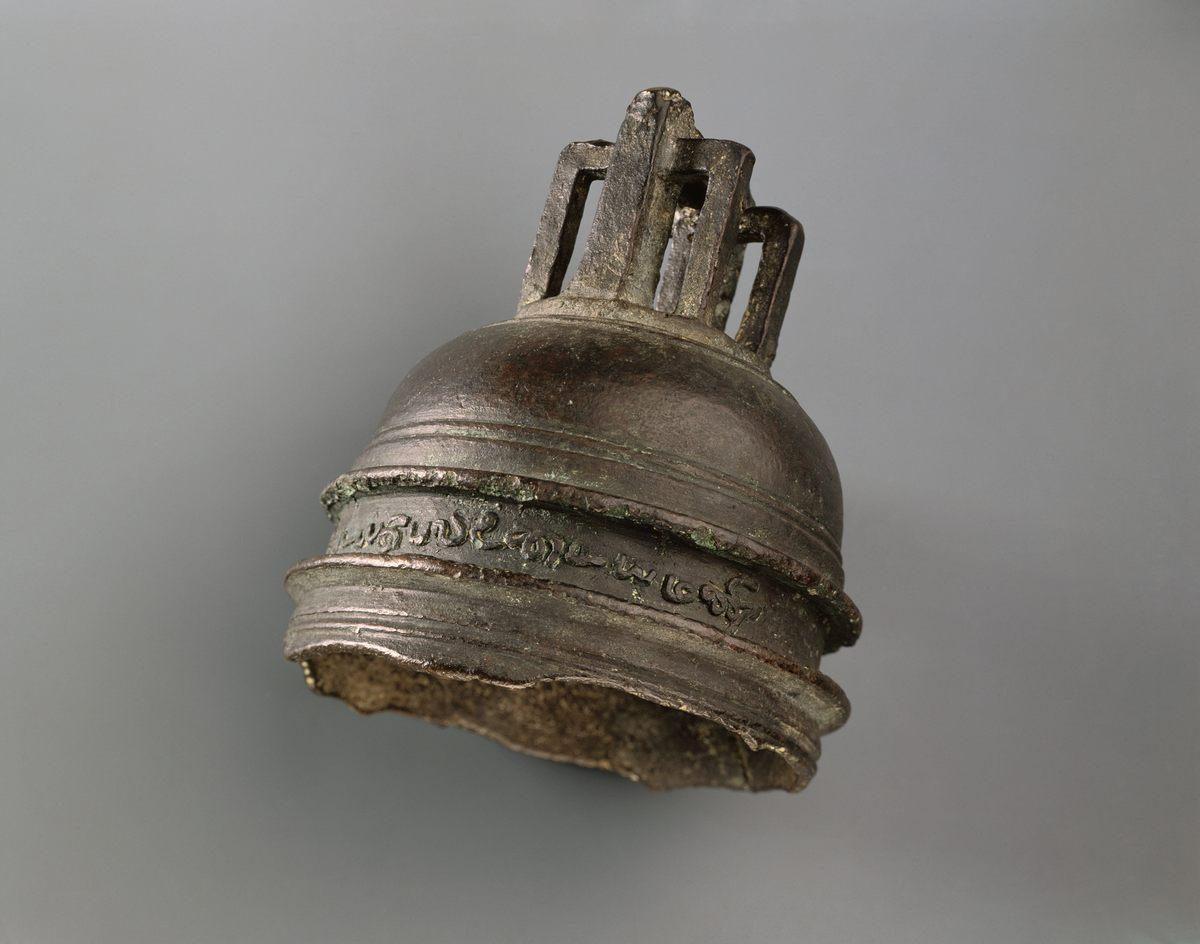
In the late 1830s, missionary William Colenso noticed Māori women near Whangārei using a strange bronze vessel as a cooking pot. It turned out to be the crown of a ship’s bell engraved in Tamil: "The bell of the ship of Mohideen Baksh." How an Indian Ocean maritime relic reached pre-colonial New Zealand remains one of the Pacific’s most compelling enigmas.
Aakash Bhagat
Founder & Editor
•Updated September 23, 2026•8 min read
The South Pacific and Indian Ocean sea lanes, across which the historic Tamil Bell made its enigmatic journey to Aotearoa New Zealand.Archaeological Archives
Atop the sacred Sivagiri hill in Palani, Tamil Nadu, stands an ancient idol crafted not from stone or bronze, but from Navapashanam—an alchemical matrix of nine deadly poisons solidified by Sage Bogar. Discover the hidden chemistry, the healing powers of the overnight sandal paste and abhishekam prasadam, the subterranean tunnel connecting Bogar's samadhi, and the controversial 2004 replacement that triggered an international antiquities investigation.
High in eastern Turkey’s Tendürek Mountains, a 515-foot boat-shaped formation has puzzled researchers for 65 years. In September 2026, university archaeologists began direct core drilling for the first time since 1988. Discover what was actually recovered, how Collins and Fasold exposed early claims, and the falsifiable test awaiting 2027 lab results.
Coorg's hillside resorts book out months in advance now. Gokarna's main beach can feel more like a queue than a shoreline, and Hampi comes with tour buses in equal measure. But Karnataka's Malnad hill country and coastal belt hold a genuinely different kind of trip: rainforest instead of resort, empty tide lines instead of beach shacks, and moss-draped forts you'll have mostly to yourself. Discover 7 secret places in Karnataka that redefine South Indian travel.
Sometime in the late 1830s — the exact year remains genuinely uncertain — a Cornish missionary named William Colenso arrived at a Māori village near Whangārei, in New Zealand’s Northland Region. He was reportedly the first European the community had ever received. What caught his attention was not the historic nature of the encounter, but a cooking pot over an open fire.
Māori women were boiling potatoes (or possibly kūmara, in a departure from the traditional hāngi earth oven) in a small bronze vessel — curious in itself, since the region had no bronze-working tradition and, as far as anyone knew, no outside trade contact. Looking closer, Colenso realised it was not a pot at all. It was the crown of a broken ship’s bell, its rim carved with an unfamiliar, swirling script.
What the Community Told Him
According to the account Colenso recorded, the bell had been in the iwi’s possession for several generations. Its origin was specific: a fierce coastal storm had uprooted a massive tree, and the bronze fragment was found tangled in its exposed roots. Colenso traded an iron pot for it — a straightforward swap of one useful utensil for another, with neither side knowing what the strange bronze fragment actually was.
Reading the Inscription: The Ship of Mohideen Baksh
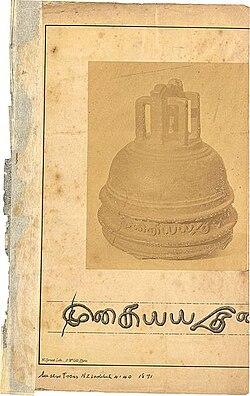
The bell sat as an unexplained curiosity for three decades before anyone could identify its script. In 1870, ethnographer J.T. Thomson sent photographs to contacts in India and Ceylon. The replies arrived within months: the inscription was archaic Tamil, reading "Mukaiyyatīṉ vakkucu uṭaiya kappal uṭaiya maṇi" — translated as "The bell of the ship of Mohideen Baksh."
Artifact Dossier: The Tamil Bell of Aotearoa
Discovery Location
Whangārei, Northland Region, New Zealand
First Documented
Late 1830s (by William Colenso)
Language & Script
Tamil (Maritime Epigraphy)
Inscription Text
Mohideen Baksh udiya kappal udiya mani
Current Custodian
Museum of New Zealand Te Papa Tongarewa
Revised Date
17th – 18th Century CE
“The bell records the customary, saint-invoking name of the ship itself — a detail that tells us less about a specific individual owner and more about the seafaring culture the vessel came from.”
Maritime Epigraphy Survey — Te Papa Tongarewa & Indian Heritage Centre
A Moving Target: Dating the Bell
Palaeographic analysis in the 1970s dated the letterforms to the late Pandya period (c. 1400–1500 CE). That dating would have made the bell’s presence in New Zealand an extraordinary anomaly, as medieval Tamil merchant voyages reached Madagascar and Indonesia, but never the remote South Pacific.
Historic sea lanes of the Indian Ocean and South Pacific, crossed by merchant dhows, East Indiamen, and whalers.Photo: Oceanic Historical Cartography Archive
In 2019, Nalina Gopal examined the bronze crown in person and found she could read the letters with surprising fluency. Because older Tamil scripts require specialized training to decipher, this modern legibility suggested a much later date. Working with epigraphers, she determined the letterforms matched the 17th or 18th century — a conclusion corroborated by the bell’s suspension canons. This revised timeframe places the bell squarely in an era when European and Asian merchant shipping was routinely crisscrossing the Southern oceans.
Historical Odyssey of the Tamil Bell
17th – 18th Century CE
Casting in Southern India
The bronze ship’s bell is cast in Tamil Nadu for a merchant vessel named after Sufi saint Mohideen Baksh.
Late 18th / Early 19th Cent.
Arrival on the New Zealand Coast
Through shipwreck, drift, or trade, the bell reaches Northland and becomes ensnared in coastal tree roots.
Late 1830s
Acquisition by William Colenso
Missionary William Colenso observes Māori women using the bronze crown and trades an iron pot for it.
1870
Decipherment by J.T. Thomson
Photographs sent to India and Ceylon confirm the inscription is archaic Tamil commemorating a ship.
2019 – Present
Modern Curatorial Revision & Cultural Bridge
Te Papa and Singapore scholars revise dating to the 17th–18th century; celebrated at the 2024 Māori–Tamil Hui.
How Might It Have Gotten There?
Researchers across more than a century have proposed three primary possibilities to explain the bell’s presence on the Northland coast: a storm-tossed shipwreck blown thousands of miles off-course; an 18th-century curio acquired by European whalers in South Asia and subsequently lost or traded; or a crewless ghost ship drifting along the Antarctic Circumpolar Current until grounding in Aotearoa.
Comparative Analysis: How Did the Bell Reach New Zealand?
Direct Indian Ocean Vessel / Wreck
Proposed Mechanism:Tamil merchant craft blown off course or drifting ghost ship
Key Proponents:Robyn Gosset (1996), early romantic theorists
Historical Feasibility:No archaeological record of direct pre-contact Tamil voyages to NZ
Epigraphical Alignment:Matches 17th–18th century Tamil Muslim seafaring tradition
Intermediary Maritime Trade / Curio
Proposed Mechanism:Acquired in Indian/Ceylon port and traded by sailors on NZ shore
Whatever ship it once rang from, the Tamil Bell has taken on a significance today that has little to do with resolving its centuries-old mystery. It has become a genuine touchstone connecting Aotearoa’s Tamil and Māori communities — displayed, for instance, at the 2024 Māori–Tamil Hui at Puketeraki Marae, its first appearance in Dunedin since Colenso himself exhibited it there in 1865. Nearly two centuries after a missionary mistook it for a cooking pot, the bell’s unresolved journey has become less a puzzle to be solved than a genuine point of connection between two communities on opposite sides of the world it apparently, somehow, once crossed.
Scholarly Frequently Asked Questions
Where can the Tamil Bell be viewed today?▼
The bell is preserved in the permanent collection of the Museum of New Zealand Te Papa Tongarewa in Wellington.
Does the bell prove pre-colonial Indian settlement in New Zealand?▼
No. Historians emphasize there is no archaeological evidence of ancient Tamil settlements in Aotearoa. The revised 17th–18th century dating points toward indirect trade, whaling curios, or accidental drift.
What does the Tamil inscription translate to?▼
It translates to "The bell of the ship of Mohideen Baksh", referencing a merchant vessel named after a revered 12th-century Sufi saint to invoke maritime protection.
Explore Related Chronicles in Maritime History & Global Horizons